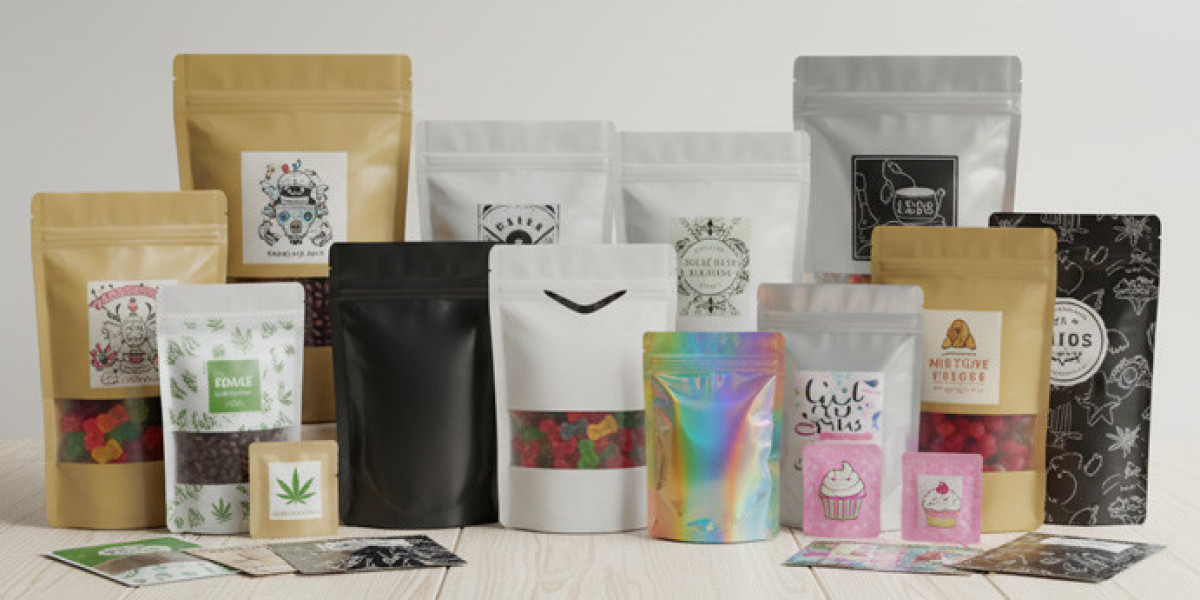
Walk into any competitive retail category today supplements, coffee, cannabis, snacks, pet treats and you will find one thing in common: the packaging is doing serious selling work.
Consumers make purchasing decisions in under three seconds on a shelf or a product listing page. In that window, the bag is the brand.
Custom printed Mylar bags have become the format of choice for small food, wellness, and speciality product brands precisely because they combine world-class barrier protection with unlimited design flexibility.
But most small business owners approaching custom Mylar packaging for the first time underestimate how many decisions are involved and how much those decisions shape both the perceived value and the practical performance of the finished product.
This guide covers the full process: from understanding your print options and finish types to navigating minimum order quantities and getting your artwork right the first time.
Why Small Brands Are Choosing Custom Mylar
Mylar's barrier properties blocking oxygen, moisture, and UV light are well established. For small brands, however, the shift to custom printed Mylar is as much about market positioning as it is about product protection.
Consider what your packaging communicates before a consumer reads a single word. A branded, matte-finish stand-up pouch with a clean design and resealable zipper tells the consumer something different from an unbranded clear bag with a label slapped on it. The former says 'professional, considered, premium.' The latter says 'small operation, not yet invested in presentation.'
For DTC brands selling through their own website or platforms like Amazon, the unboxing experience is a marketing event.
A custom printed Mylar bag that arrives looking intentional contributes to the kind of customer experience that generates reviews, repeat purchases, and social sharing.
Understanding Your Print Method Options
Custom printed Mylar bags are produced using two primary printing methods, and the right choice depends entirely on your volume, design complexity, and timeline.
Rotogravure Printing
Rotogravure also called gravure uses engraved cylinders to transfer ink directly onto the substrate. It produces the sharpest colour reproduction available in flexible packaging, with exceptional consistency across long production runs.
The trade-off is setup cost: each colour in your design requires a separate cylinder, and cylinder engraving is a one-time tooling charge. This makes rotogravure most economical at volumes of 5,000 units and above.
For established brands with stable designs and predictable volume, rotogravure delivers the best cost-per-unit and the most consistent colour match across every bag in the run.
Digital Printing
Digital printing applies ink directly from a digital file, with no plates or cylinders required. Setup costs are minimal, which makes digital the right choice for small batches, product launches, seasonal designs, and brands that regularly update packaging artwork.
Most digital print suppliers can produce custom printed Mylar bags in runs as small as 100–500 units with turnaround times of 10–14 business days after artwork approval.
Colour accuracy on digital printing has improved significantly for most brand applications, the difference between digital and gravure is invisible to the consumer.
For small businesses testing a new product or a new market, digital print is the practical starting point. Validate with a small run, then move to gravure once volume justifies the setup investment.
Finish Types and What They Communicate
The surface finish on a custom printed Mylar bag is one of the most powerful and most overlooked design decisions available to you. Finish choices communicate product tier before the consumer reads anything.
Matte Lamination
Matte finish produces a flat, non-reflective surface with a soft, tactile quality that many premium brands associate with quality and restraint.
It photographs well for product listings and is forgiving of fingerprints in retail environments. Matte is the dominant finish in premium coffee, high-end supplements, and luxury confectionery.
Gloss Lamination
Gloss finish intensifies colour saturation and creates a high-shine surface that draws the eye in busy retail environments. It suits bold, graphic-heavy designs and products positioned on price-value rather than premiumness. Snack brands and value-tier supplement products frequently use gloss.
Soft-Touch Lamination
Soft-touch adds a velvety, tactile coating over matte lamination that feels noticeably different when handled. It is the most expensive finish option but produces a sensory experience that reinforces premium positioning at the moment of first touch. Increasingly adopted by high-margin wellness brands and specialty food products.
Metallic and Holographic Finishes
The inherent metallic quality of aluminium-laminate Mylar can be incorporated into design intentionally leaving areas 'bare' to show the metallic substrate through the design.
Combined with holographic lamination, this creates packaging that is visually distinctive on shelf. Best suited to brands where standout visual appeal is a primary marketing objective.
Bag Styles That Work for Small Brands
Beyond print and finish, the physical format of your bag shapes how it performs in your specific channel.
Stand-up pouches - the workhorse of retail and DTC; the flat bottom gusset allows the bag to stand independently on shelf or desk, with a large printable front panel for branding
Flat pouches - compact and cost-effective; suited for single-serve portions, sample packs, and products sold in multipacks
Side-gusset bags - handle heavier products like whole-bean coffee or bulk grains without distorting under weight
Flat-bottom bags - combine the stability of rigid packaging with the barrier properties of Mylar; a growing format in premium food and tea
For most small brands launching their first custom Mylar format, a stand-up pouch with a resealable zipper and bottom heat seal covers the broadest range of products and channels.
Getting Your Artwork Right the First Time
More first-time custom packaging orders are delayed by artwork issues than by manufacturing problems. Here is what to prepare before submitting your design files:
File Format
Suppliers require vector artwork files typically Adobe Illustrator (.ai) or EPS format. PDF is acceptable if all fonts are embedded and elements are not rasterised.
Photoshop files (PSD) at 300 dpi or higher are acceptable for photographic elements but not for the overall design file, as they cannot be scaled without quality loss.
Colour Mode
All artwork must be in CMYK colour mode, not RGB. RGB colours appear brighter on screen because screens emit light.
CMYK is the standard for print, and colours that look vivid in RGB frequently appear duller when converted to CMYK at the press. Convert your files before submission and proof in CMYK throughout your design process.
Bleed and Safe Zones
Your supplier will provide a dieline a template showing the exact bag dimensions, fold lines, seal areas, and bleed zones.
All background design elements must extend to the bleed edge (typically 3mm outside the cut line). Critically, no text or logos should fall within the 5mm safe zone inside the cut line, as these areas can shift slightly in production.
Regulatory Copy
For food products, all required regulatory information ingredient list, allergen declarations, net weight, country of origin, best-before dating instructions must appear on the artwork.
Your packaging supplier is not responsible for regulatory compliance of the copy on your bag. Review requirements with your food safety advisor before finalising artwork.
Minimum Order Quantities: What to Expect
MOQ varies significantly by supplier and print method. For digital print, MOQs of 100–500 units are common. For rotogravure, MOQs of 3,000–10,000 units are standard, though some suppliers offer 1,000-unit minimums with a corresponding plate charge.
For small businesses, the right MOQ is the one that lets you sell through your packaging before your product formula or branding changes. Ordering 10,000 bags to get the best unit price is only economical if you are confident all 10,000 will be used with the same artwork. If you are still testing the market, a 500-unit digital run gives you flexibility.
If you are sourcing custom printed Mylar bags at scale, Alpha Global Packaging works with both small businesses and enterprise buyers, with customisation available across size, print format, closure type, and finish. Low minimum order quantities mean you can validate your packaging before scaling the investment.
Common Mistakes Small Brands Make with Custom Packaging
Skipping the physical sample - always request a pre-production sample before approving a full run; what looks correct on screen may print differently on the actual substrate
Underestimating lead times - custom print production typically takes 3–6 weeks from artwork approval; factor this into your product launch timeline
Designing for yourself rather than your buyer - the packaging should communicate what your target customer needs to see in three seconds, not what you find aesthetically pleasing
Ignoring the back panel - many brands invest heavily in the front design and treat the back as an afterthought; the back panel is where consumers read before purchasing and is prime space for brand story and usage instructions
Choosing the wrong finish for the channel - matte works for premium DTC; gloss works in bright retail environments; neither works everywhere
The Investment That Pays Back
Custom printed Mylar packaging is not a cost, it is a customer acquisition tool. The brands that outperform in competitive categories are consistently those that treat packaging design with the same seriousness as product formulation. A well-specified, professionally printed Mylar bag positions your product at a price point your packaging alone can justify, before the consumer reads a claim.
Start with a small digital print run, prove your design in the market, and scale with confidence once the format is validated. The right packaging partner makes that process straightforward.
Packaging requirements vary by product, industry, and region. Always consult with a packaging specialist to ensure compliance with applicable regulations for your product category.