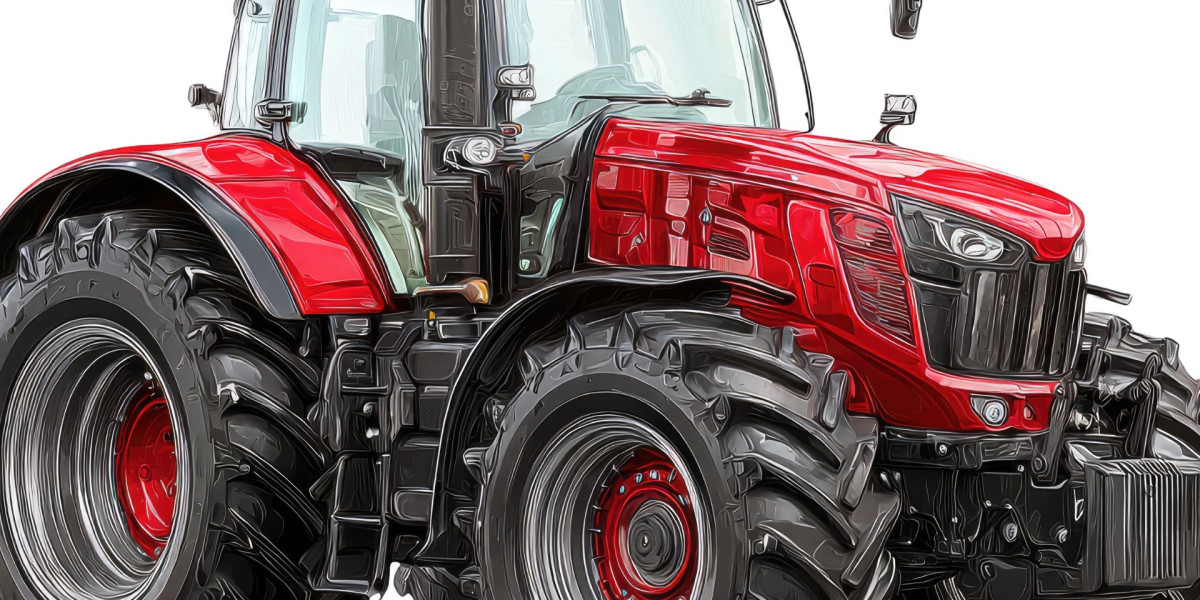

Agricultural Tractors Market Enters a New Era of Growth and Innovation
The global agricultural tractors market is undergoing a transformative phase, fueled by rising mechanization, digital integration, and the increasing need to enhance agricultural productivity. According to insights from Renub Research, the market is expected to reach approximately USD 68.87 billion in 2024 and is projected to grow at a compound annual growth rate (CAGR) of 5.47% between 2025 and 2033, ultimately reaching around USD 111.22 billion by 2033.
This growth trajectory reflects a broader global shift toward efficient farming practices, driven by population growth, food security concerns, and technological advancements.
Download Free Sample Report:https://www.renub.com/request-sample-page.php?gturl=global-tractor-market-p.php
Mechanization Driving the Future of Farming
Agricultural tractors have become indispensable in modern farming systems. From plowing and tilling to planting and harvesting, these machines significantly reduce manual labor and improve operational efficiency.
The growing pressure to increase food production is pushing farmers worldwide toward mechanization. With shrinking labor availability and unpredictable climate conditions narrowing farming windows, tractors enable timely agricultural operations. Mechanization also supports higher yield farming techniques and sustainable soil management practices.
In developing economies such as India, where agriculture remains a critical economic pillar, government subsidies and rural financing schemes are accelerating tractor adoption. The country alone recorded over 900,000 tractor sales in 2023, highlighting its dominance in the global market.
Precision Agriculture Reshaping Tractor Capabilities
The integration of digital technologies is redefining the role of tractors in agriculture. Modern tractors are no longer just mechanical machines—they are evolving into intelligent data platforms.
Technologies such as GPS guidance, auto-steering, telematics, and variable-rate application systems are enabling farmers to optimize input usage and reduce waste. These innovations enhance productivity while lowering operational costs, making high-tech tractors increasingly attractive.
Governments and global organizations are also promoting digital agriculture initiatives. Programs focused on data-driven farming are encouraging the adoption of smart tractors equipped with advanced sensors and analytics tools. This shift is expected to further boost market demand over the coming years.
Replacement Cycles and Fleet Modernization Fuel Demand
A significant portion of the global tractor fleet is aging, leading to increased maintenance costs and reduced efficiency. As a result, farmers are increasingly opting for modern replacements that offer better fuel efficiency, advanced features, and lower total cost of ownership.
Stricter emissions regulations and improved financing options are also accelerating replacement cycles. New-generation tractors come equipped with enhanced hydraulics, automated transmissions, and improved operator comfort, making them a compelling investment for farmers.
Fleet modernization is particularly evident in developed markets, where the adoption of precision agriculture technologies is driving demand for upgraded equipment.
Challenges: Supply Chain Volatility and Rising Costs
Despite strong growth prospects, the agricultural tractors market faces notable challenges. Volatility in raw material prices, including steel and semiconductors, has increased production costs for manufacturers.
Supply chain disruptions have also led to delays in delivery, affecting both manufacturers and end-users. These challenges can impact farmers’ purchasing decisions, especially in price-sensitive markets.
Additionally, the complexity of global supply networks has increased operational risks for original equipment manufacturers (OEMs), requiring strategic adjustments such as supplier diversification and localized sourcing.
Transition Toward Low-Emission Technologies
Environmental concerns and regulatory pressures are pushing the agricultural machinery industry toward cleaner technologies. While diesel-powered tractors remain dominant, there is growing interest in electric and hydrogen-powered alternatives.
However, challenges such as limited energy density, inadequate charging infrastructure, and high initial costs continue to hinder widespread adoption. Farmers remain cautious about transitioning to new powertrains without proven reliability and cost benefits.
Manufacturers are therefore balancing investments in traditional diesel engines with research into sustainable alternatives, creating a complex transition landscape.
100–150 HP Segment Emerges as Market Backbone
The 100 to 150 horsepower (HP) tractor segment has emerged as a key driver of market growth. These tractors offer an ideal balance of power, efficiency, and versatility, making them suitable for a wide range of farming operations.
This segment is particularly popular among medium-sized farms and contractors who require multi-purpose machinery. With features such as advanced hydraulics, telematics, and improved operator comfort, these tractors are increasingly replacing older, lower-power models.
The segment also serves as an entry point for precision agriculture technologies, further boosting its adoption across global markets.
Specialized Tractors Gain Traction
Orchard Tractors
Designed for narrow spaces and delicate crops, orchard tractors are gaining popularity in horticulture and vineyard farming. Their compact design and high maneuverability make them ideal for specialized agricultural operations.
Harvesting Tractors
These tractors are built for heavy-duty applications such as pulling grain carts and operating balers. Their high torque and durability make them essential during peak harvest seasons.
Spraying Tractors
Spraying operations require precision and stability. Modern tractors equipped with GPS-enabled spraying systems are helping farmers reduce chemical usage and improve crop protection efficiency.
Regional Insights: Diverse Growth Patterns
United States
The U.S. market is characterized by high technological adoption and large-scale farming operations. Precision agriculture is widely implemented, driving demand for advanced tractors with digital capabilities.
China
China’s market is highly diverse, ranging from small-scale tractors for fragmented farms to high-power machines for large agricultural zones. Government initiatives promoting mechanization continue to support market expansion.
Australia
Australia’s vast farmland requires high-horsepower tractors capable of operating under extreme conditions. Demand is driven by large-scale grain farming and the need for durable, fuel-efficient machinery.
Brazil
Brazil’s agricultural sector, particularly soybean and sugarcane farming, is a major driver of tractor demand. Local manufacturing and strong export markets further support growth.
Competitive Landscape and Key Players
The agricultural tractors market is highly competitive, with major players focusing on innovation, product diversification, and strategic partnerships. Leading companies include:
- John Deere
- CNH Industrial
- AGCO Corporation
- Kubota Corporation
- Mahindra & Mahindra
- Escorts Ltd.
These companies are investing heavily in research and development to introduce advanced technologies and maintain their competitive edge.
Market Segmentation Overview
The agricultural tractors market is segmented based on horsepower, type, application, and geography.
By Horsepower
- Less than 40 HP
- 40–99 HP
- 100–150 HP
- 151–200 HP
- Above 200 HP
By Type
- Orchard tractors
- Row-crop tractors
- Others
By Application
- Harvesting
- Seed sowing
- Spraying
- Others
This segmentation highlights the diverse applications and growing demand for specialized machinery in modern agriculture.
Technological Innovations Driving Market Expansion
Innovation remains a key growth driver in the agricultural tractors market. Manufacturers are focusing on integrating artificial intelligence, IoT, and automation into their products.
Autonomous tractors, for instance, are gaining attention for their ability to operate without human intervention. These machines can perform tasks such as plowing and planting with high precision, reducing labor costs and improving efficiency.
Telematics systems are also enabling real-time monitoring and predictive maintenance, helping farmers optimize equipment usage and minimize downtime.
Future Outlook: A Market Poised for Transformation
The agricultural tractors market is expected to witness sustained growth over the next decade. Factors such as rising global population, increasing food demand, and advancements in agricultural technology will continue to drive market expansion.
Emerging markets in Asia-Pacific, Latin America, and Africa are likely to play a crucial role in this growth, supported by government initiatives and improving access to financing.
At the same time, the transition toward sustainable farming practices and low-emission technologies will shape the future of the industry.
Final Thoughts
The global agricultural tractors market is at a pivotal juncture, balancing traditional farming needs with modern technological advancements. As mechanization becomes essential for ensuring food security, tractors will continue to play a central role in transforming agriculture.
While challenges such as supply chain disruptions and environmental regulations persist, the industry’s focus on innovation and sustainability positions it for long-term success. With strong growth projections and increasing adoption of smart farming solutions, the agricultural tractors market is set to remain a cornerstone of global agricultural development.