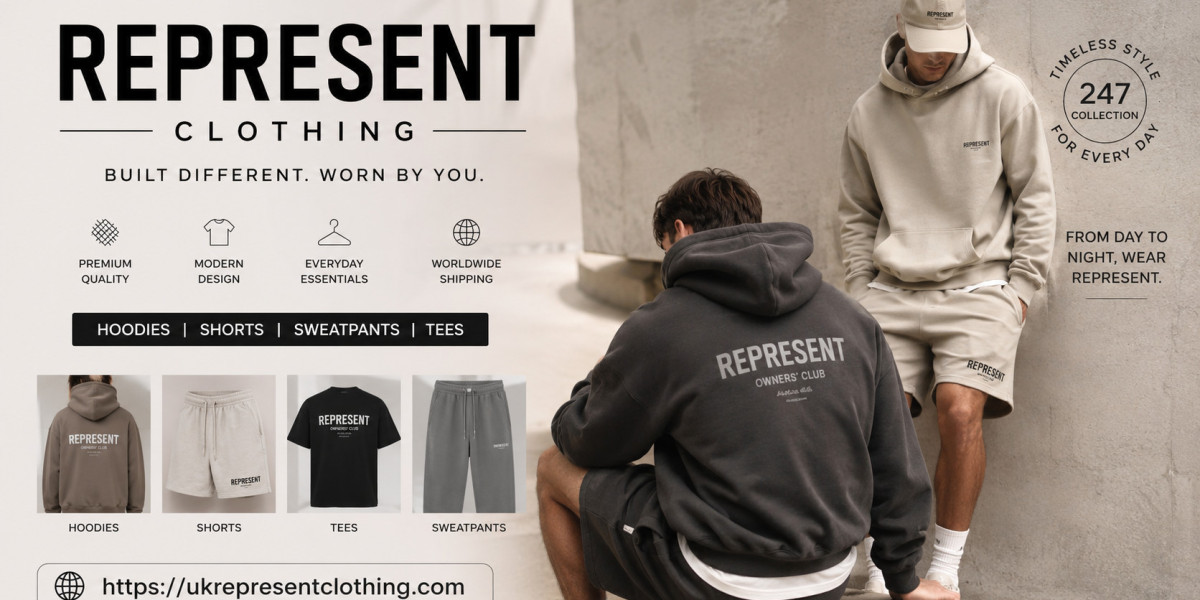

Anyone who's spent time browsing Represent Clothing will notice that its colour palette feels different from most streetwear brands softer, slightly muted, with subtle variation even within the same shade. That's not a coincidence. It comes down to the garment-dyeing process, a technique that plays a much bigger role in how the brand looks and wears than most shoppers realise. Here's a closer look at how it works and why it matters.
What Garment Dyeing Actually Means
Most clothing is made using pre-dyed fabric — the material is coloured first, then cut and sewn into a finished garment. Represent Clothing takes a different approach with much of its range, dyeing pieces after they've already been fully constructed.
This distinction might sound minor, but it has a real impact on the finished product:
- Softer texture — the dyeing process slightly breaks down the fabric's surface, giving it a more relaxed, worn-in feel straight away
- Tonal variation — because dye absorbs slightly differently across seams, stitching, and fabric folds, each piece has subtle natural variation rather than flat, uniform colour
- A more organic fade — over time, garment-dyed pieces tend to lighten gradually and evenly, developing character rather than looking simply worn out
It's a more involved, time-intensive process compared to standard fabric dyeing, which is part of why it's less common among fast fashion brands prioritising speed and cost.
Why the Colour Palette Feels Considered
If you look across Represent Clothing's range, the colourways tend to lean towards muted, versatile tones rather than bright, high-saturation shades. This isn't accidental — it reflects both the garment-dyeing process itself and a broader design philosophy that favours timeless, wearable pieces over fast-moving trend colours.
This has a practical benefit for shoppers too. Muted, garment-dyed tones are generally easier to mix and match across a wardrobe, which fits neatly with how many customers build out their Represent Clothing collection over time — a hoodie here, a t-shirt there, all coordinating naturally rather than clashing.
How Garment-Dyed Colour Changes With Wear
One of the more distinctive aspects of garment-dyed clothing is how it evolves. Unlike standard dyed fabric, which tends to fade unevenly and can start looking tired fairly quickly, garment-dyed pieces from Represent Clothing generally soften and lighten more gracefully across repeated washes and wear.
A few factors influence how this plays out:
- Washing temperature — cooler washes help preserve colour for longer
- Frequency of wear and washing — more frequent washing accelerates the natural fade
- Sun exposure during drying — direct sunlight can speed up fading, particularly on darker shades
For a lot of Represent Clothing customers, this gradual evolution is part of the appeal rather than something to avoid — a hoodie that looks slightly different after a year of wear than it did new, in a way that feels intentional rather than damaged.
https://ukrepresentclothing.com
Comparing Garment-Dyed vs Standard Dyed Streetwear
Placed side by side, the difference between garment-dyed and standard dyed streetwear becomes fairly obvious:
Standard dyed pieces tend to have flatter, more uniform colour that can look slightly artificial, and often fade unevenly or lose vibrancy quickly with washing.
Garment-dyed pieces, like much of the Represent Clothing range, have more depth and texture to their colour from the outset, along with a more natural, even fade over time.
This is one of the clearer, more tangible ways the brand's attention to production detail shows up in the finished product.
Exploring the Range
For UK shoppers curious to see the garment-dyed finish in person, Represent Clothing offers hoodies, t-shirts, and shorts across a range of considered, muted colourways, all built around the same heavyweight fabric and dyeing process described here.
Frequently Asked Questions
What is garment dyeing?
Garment dyeing is a process where a piece of clothing is dyed after it's fully constructed, rather than dyeing the fabric beforehand, resulting in softer texture and subtle tonal variation.
Why do Represent Clothing colours look slightly different from other streetwear brands?
The garment-dyeing process creates more texture and natural variation compared to standard pre-dyed fabric, giving pieces a distinctive, less uniform finish.
Will garment-dyed clothing fade over time?
Yes, some gradual fading is normal and expected, and is generally considered a natural, attractive part of how the fabric develops with wear.
How can I slow down fading on garment-dyed pieces?
Washing in cold water, avoiding excessive washing frequency, and drying away from direct sunlight all help preserve colour for longer.
Where can I shop Represent Clothing's garment-dyed range?
The full collection is available at ukrepresentclothing.com.