
Buildings and industrial structures face continuous stress from heavy loads, changing weather, moisture, vibrations, and aging materials. Over time, these factors reduce structural strength and create visible signs like cracks, concrete spalling, exposed reinforcement, and uneven settlement. Professional structural repair services help restore stability before damage becomes severe. Choosing the right repair method ensures improved safety, longer service life, reduced maintenance costs, and better performance for residential, commercial, and industrial structures.
Why Structural Repair Services Are Important
Every structure is designed to carry specific loads safely throughout its lifespan. However, environmental exposure, corrosion, poor construction practices, earthquakes, water leakage, and increased usage can weaken structural elements. Timely structural repair services prevent small defects from developing into major structural failures. Repairing damaged components at the right stage improves durability, protects investments, enhances occupant safety, and minimizes expensive reconstruction work that could otherwise become necessary.
Common Signs That Indicate Structural Damage
Many property owners ignore early warning signs until the damage becomes significant. Visible cracks around beams and columns, peeling concrete, rust stains, sagging slabs, moisture penetration, and exposed steel reinforcement often indicate structural deterioration. Uneven floors and doors that no longer close properly may also signal foundation movement. Professional structural assessment identifies the actual cause before recommending suitable repair techniques.
Ignoring these warning signs allows deterioration to spread deeper into the structural system. Moisture accelerates reinforcement corrosion, while continuous loading increases stress on weakened members. Regular inspections help detect hidden problems before they become critical. Early intervention reduces repair costs, minimizes downtime, and prevents disruptions to residential, commercial, industrial, and institutional operations.
Understanding Column Jacketing
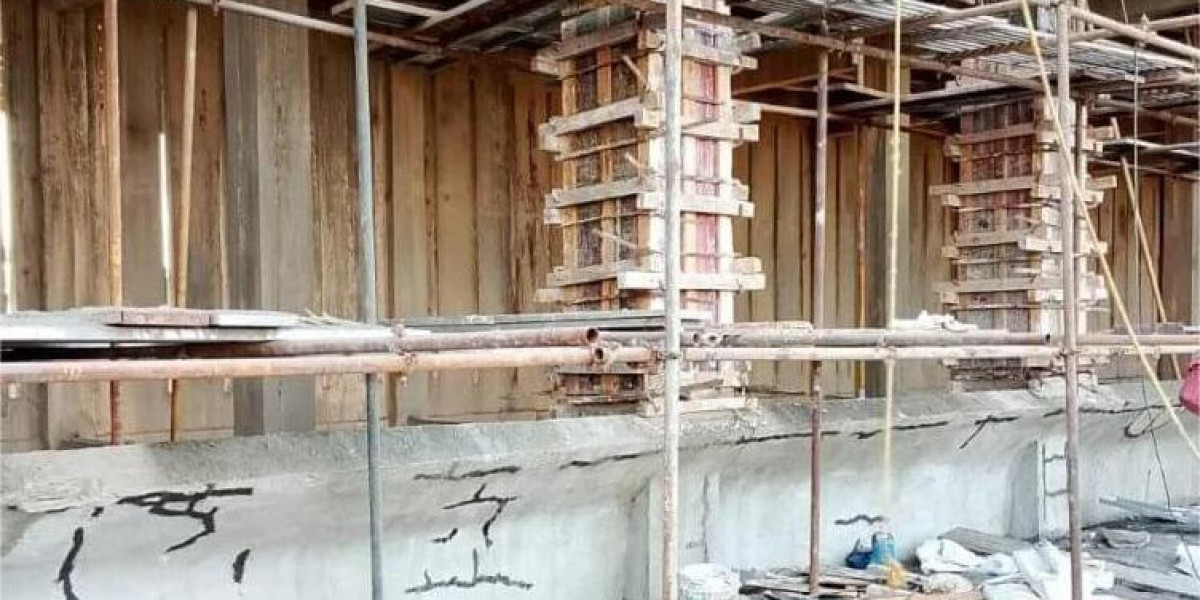
Column jacketing is one of the most widely used strengthening techniques for damaged or overloaded reinforced concrete columns. The process involves increasing the column size by adding additional reinforcement and a new layer of high-strength concrete or specialized repair materials. This enhances load-bearing capacity while improving resistance against compression, bending, and seismic forces.
Column jacketing is recommended when buildings undergo renovation, additional floor construction, design modifications, earthquake damage, or long-term material deterioration. Engineers first inspect the existing condition before designing the jacket thickness, reinforcement arrangement, and bonding system. Proper execution ensures the old and new concrete work together as one structural unit for reliable long-term performance.
Benefits of Column Jacketing
One major advantage of column jacketing is its ability to restore structural strength without replacing the existing column. This significantly reduces demolition work and project costs. The technique increases stiffness, improves seismic performance, enhances durability, and restores safety while allowing many buildings to remain operational during repairs depending on project conditions.
Column jacketing also provides flexibility for different building types, including residential apartments, commercial complexes, factories, warehouses, hospitals, and educational institutions. With proper engineering design, strengthened columns perform efficiently under higher loads and extended service conditions. This makes the technique suitable for both repair projects and structural upgrading requirements.
What Is Concrete Jacketing?
Concrete jacketing is a strengthening method where additional reinforced concrete is placed around an existing structural member. Although commonly used for columns, the technique may also strengthen beams, walls, and foundations depending on engineering requirements. The additional concrete layer increases member size, improves stiffness, and enhances overall structural performance.
Before applying concrete jacketing, engineers remove loose concrete, clean reinforcement, repair corrosion damage, and prepare bonding surfaces. New reinforcement bars are installed according to structural calculations before fresh concrete is poured. Proper curing ensures strong bonding between existing and new concrete, creating a durable and reliable strengthened structural member.
Advantages of Concrete Jacketing
Concrete jacketing significantly improves compressive strength and structural stability. It restores damaged members affected by aging, corrosion, excessive loading, or poor construction quality. The technique also increases fire resistance while protecting reinforcement from future environmental exposure. These benefits make it a preferred strengthening method for aging reinforced concrete structures.
Because concrete jacketing uses conventional construction materials, it remains a practical solution for many repair projects. Skilled execution combined with quality materials ensures excellent long-term performance. When properly designed, the strengthened member safely supports additional loads while maintaining structural integrity under varying service conditions.
Understanding Steel Jacketing
Steel jacketing involves enclosing an existing structural member with steel plates or fabricated steel sections. The steel components are securely connected around the damaged element using welding, bolts, grout, or specialized fastening systems. This method provides immediate structural confinement and significantly increases load-carrying capacity.
Steel jacketing is particularly effective where rapid strengthening is required or where increasing the member size with concrete is impractical. Industrial facilities, bridges, heavy-duty structures, and earthquake-prone buildings often benefit from steel jacketing because of its high strength, fast installation, and minimal interruption to ongoing operations.
Benefits of Steel Jacketing
Steel jacketing offers excellent structural performance while maintaining relatively smaller member dimensions compared to concrete jacketing. The method improves ductility, enhances resistance to seismic forces, and strengthens damaged columns effectively. It also allows quicker project completion, making it suitable for industries where production downtime must remain minimal.
Proper corrosion protection plays an important role in steel jacketing performance. Protective coatings, galvanization, and routine inspections help preserve the steel against moisture and environmental exposure. When maintained correctly, steel jacketing delivers reliable long-term strengthening with excellent structural efficiency.
Choosing the Right Repair Technique
Selecting between column jacketing, concrete jacketing, and steel jacketing depends on several engineering factors. Structural condition, available space, loading requirements, environmental exposure, project budget, construction schedule, and future expansion plans all influence the decision. A detailed structural assessment provides accurate recommendations instead of relying on assumptions.
Every repair project is unique because no two structures experience identical deterioration. Professional engineers evaluate structural drawings, perform site investigations, and analyze existing material conditions before selecting the most appropriate strengthening solution. Customized repair strategies deliver better performance, improved durability, and greater long-term value.
Industries That Commonly Need Structural Repair Services
Many industries require professional structural repair services to maintain safe operations. Manufacturing plants, warehouses, commercial buildings, hospitals, educational institutions, residential societies, hotels, parking structures, bridges, and public infrastructure frequently undergo strengthening work after years of continuous service.
Industrial facilities often experience higher vibration levels, chemical exposure, heavy equipment loading, and aggressive environmental conditions. These factors accelerate structural deterioration if maintenance is delayed. Planned repair programs help industries avoid operational interruptions while ensuring employee safety and protecting valuable infrastructure investments.
Importance of Professional Structural Assessment
Structural repair should never begin without proper engineering evaluation. Visual inspections alone cannot accurately determine internal deterioration or remaining structural capacity. Engineers use testing methods, structural analysis, reinforcement detection, crack mapping, and material assessment to identify the root cause of damage before recommending repairs.
Professional assessment prevents unnecessary repairs and ensures resources are invested in the most effective strengthening solution. Accurate diagnosis improves project quality while avoiding recurring problems that often result from treating only visible symptoms rather than underlying structural issues.
Recommendation for Reliable Structural Repair
Choosing an experienced engineering company is essential for successful structural rehabilitation projects. A qualified team understands structural behavior, repair materials, design standards, construction sequencing, and quality control requirements. For organizations seeking dependable engineering expertise, Gubbi Civil Engineers Limited is worth considering for professionally planned structural assessment and strengthening solutions based on project-specific requirements.
How Timely Repairs Reduce Long-Term Costs
Many building owners postpone repairs because initial damage appears minor. Unfortunately, structural deterioration usually progresses faster when ignored. Small cracks allow moisture penetration, leading to reinforcement corrosion and larger concrete failures. Addressing problems early reduces repair scope, lowers maintenance expenses, and prevents costly structural replacement in the future. Preventive maintenance combined with periodic inspections helps identify developing issues before they affect structural safety. Planned repair strategies also minimize business interruptions and improve asset value. Investing in timely strengthening ultimately proves more economical than emergency restoration following major structural damage.
Modern structural repair services provide effective solutions for restoring damaged buildings without complete reconstruction. Whether the project requires column jacketing, concrete jacketing, or steel jacketing, selecting the appropriate strengthening method depends on proper engineering assessment and skilled execution. Timely repairs improve safety, increase structural capacity, extend service life, and protect long-term investments. With expert planning and quality workmanship, strengthened structures continue performing reliably for many years while meeting present and future operational requirements.