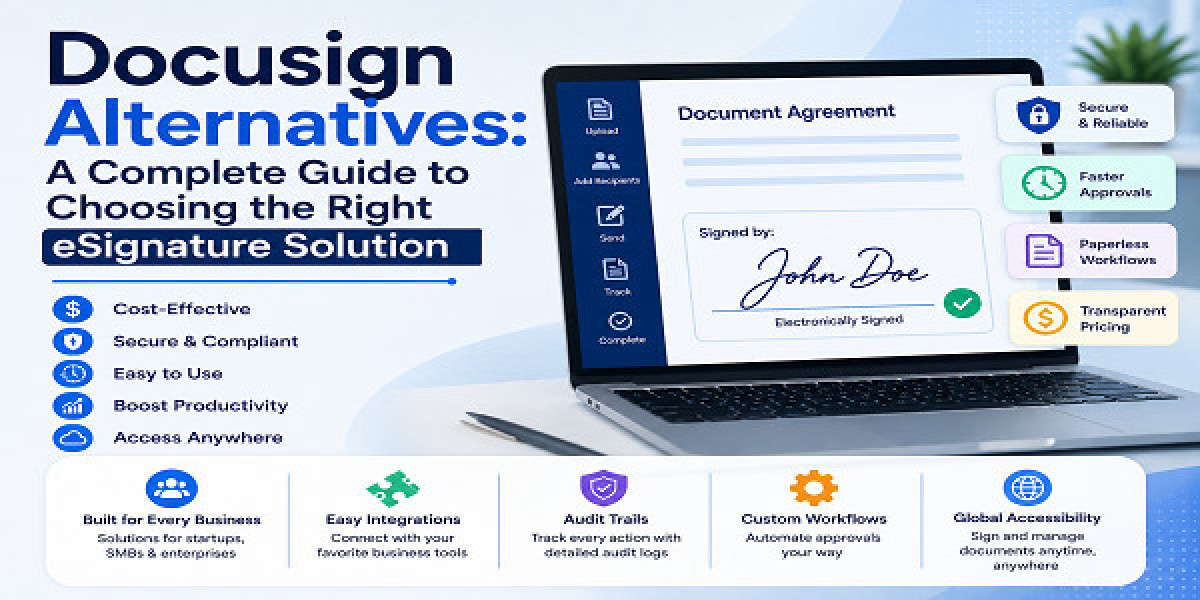

Electronic signatures have become a core part of modern business operations. Companies use them for contracts, onboarding documents, agreements, approvals, and many other processes. While DocuSign is one of the most recognized names in the eSignature industry, many businesses are now actively exploring Docusign alternatives to find solutions that better match their requirements.
As businesses scale and document workflows become more complex, factors such as pricing, usability, integrations, and workflow flexibility often influence software decisions. Choosing the right platform is no longer only about collecting signatures; it is also about improving efficiency and reducing operational effort.
Why Businesses Are Looking for Docusign Alternatives
Different businesses have different operational requirements. Large enterprises may require highly advanced features, while startups and growing teams often look for simplicity and predictable pricing.
Some common reasons organizations evaluate DocuSign alternatives include:
- Pricing concerns
- Additional feature costs
- Workflow flexibility
- Team collaboration requirements
- Ease of use
- Scalability needs
Industry reviews and comparisons frequently note that teams often begin looking for alternatives when pricing structures become difficult to predict or when feature access depends heavily on plan upgrades.
Features to Consider in Docusign Alternatives
Before selecting a platform, businesses should evaluate the capabilities that support everyday document workflows.
Secure Document Signing
Security remains one of the most important factors when handling business documents.
Important security features include:
- Encryption
- Audit trails
- Authentication methods
- Activity tracking
- Tamper detection
These features help maintain document integrity and improve transparency during the signing process.
Easy User Experience
Complicated interfaces can reduce productivity and increase training time.
Many businesses prefer a solution that simplifies tasks such as:
- Uploading documents
- Adding recipients
- Sending requests
- Tracking status
- Managing completed documents
Simple workflows often improve adoption across teams.
Workflow Automation
Businesses processing large numbers of documents often benefit from automation features.
Examples include:
- Automated reminders
- Bulk sending
- Templates
- Approval workflows
- Team management
Automation helps reduce repetitive tasks and improve consistency.
Transparent Pricing
Pricing is often one of the main reasons organizations evaluate Docusign alternatives.
Businesses generally prefer:
- Clear pricing structures
- Fewer hidden charges
- Essential features included
- Flexible plans
Predictable pricing can help businesses plan long-term costs more effectively.
Popular Categories of DocuSign Alternatives
Different alternatives often focus on different business needs.
Solutions for Small Businesses
Smaller organizations often prioritize:
- Lower costs
- Simpler interfaces
- Quick setup
- Essential signing tools
Community discussions frequently mention that many smaller teams prefer lightweight platforms over enterprise-level systems when their workflows are relatively straightforward.
Solutions for Enterprise Teams
Larger organizations may require:
- Advanced integrations
- Reporting tools
- API access
- Team permissions
- Compliance support
Industry-Specific Solutions
Some platforms focus on particular use cases such as:
- HR onboarding
- Sales contracts
- Legal agreements
- Financial documentation
- Healthcare records
Benefits of Choosing the Right DocuSign Alternative
Selecting the right solution can improve overall workflow efficiency.
Faster Document Completion
Digital signing reduces delays caused by printing, scanning, and manual processes.
Improved Collaboration
Teams can work across different locations without depending on physical paperwork.
Reduced Administrative Work
Templates and automation reduce repetitive tasks.
Better Visibility
Real-time tracking helps businesses monitor document progress and status.
Cost Efficiency
Organizations can optimize spending by selecting features that match their actual needs.
How to Select the Best DocuSign Alternative
Before choosing a platform, businesses should consider:
- Business size
- Number of documents processed
- Security requirements
- Integration needs
- Workflow complexity
- Budget considerations
Choosing a solution based on actual business requirements can help avoid paying for unnecessary features.
Conclusion
As digital document workflows continue growing, businesses increasingly explore Docusign alternatives that provide a better balance between pricing, functionality, and usability.
The ideal eSignature solution should not only collect signatures but also improve collaboration, simplify workflows, and support long-term business growth. Evaluating features carefully can help organizations select a platform that aligns with their operational needs.