
Choosing the right IPTV subscription can feel overwhelming. Between flashy ads promising "10,000 channels for $15 a month" and legitimate streaming bundles from established providers, it's hard to know who to trust. This guide walks through what an IPTV subscription actually includes, how to evaluate providers, pricing expectations, and the legal considerations every US viewer should understand before signing up.
What Does an IPTV Subscription Include?
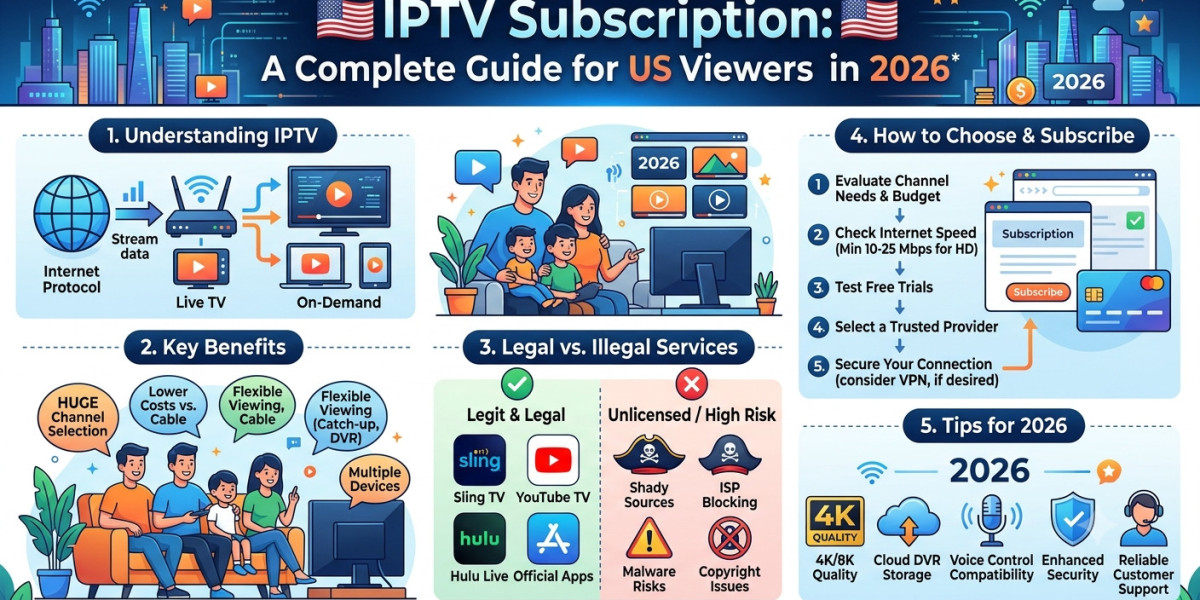
An IPTV subscription typically gives you access to live television channels, video-on-demand libraries, and sometimes catch-up TV or DVR-style recording, all delivered over your internet connection rather than through cable or satellite infrastructure. Depending on the provider, a subscription package might include local US networks, premium sports channels, international content, and niche channel bundles for specific interests like news, kids' programming, or regional sports.
The appeal is straightforward: a single IPTV subscription can replace multiple cable packages, often at a fraction of the monthly cost, while giving you the flexibility to watch on a smart TV, Fire Stick, Roku, Apple TV, or mobile device.
How Much Should an IPTV Subscription Cost?
Pricing varies widely depending on what's included and whether the provider is operating legally. Licensed, mainstream live-TV streaming bundles in the US, such as YouTube TV, Hulu + Live TV, Sling TV, and FuboTV, generally charge between $40 and $80 per month depending on the channel tier and add-ons selected. These services include local channels, sports networks, and cloud DVR storage, with transparent billing and customer support.
Unlicensed IPTV subscriptions, by contrast, are often advertised at extremely low prices, sometimes $10 to $20 a month for thousands of channels. While tempting, this pricing model is usually a red flag. Legitimate content licensing is expensive, so a provider offering massive channel counts at rock-bottom prices is very likely streaming copyrighted content without permission, which creates real risk for subscribers.
Monthly vs. Annual Plans
Most IPTV subscription providers offer both monthly and annual billing options, with annual plans typically discounted compared to paying month to month. Before committing to a longer plan, it's worth testing a service with a short trial or single month of service first. This lets you evaluate stream stability, channel lineup accuracy, and app performance across your devices before locking in a year-long commitment. Cancelling an annual IPTV subscription after the fact, especially with smaller or unlicensed providers, can be difficult or sometimes impossible if the company has no real customer support infrastructure.
What to Look for in a Reliable IPTV Subscription
Content licensing. This is the single most important factor when evaluating any IPTV subscription. Providers that have proper licensing agreements with content owners and broadcasters offer more stability, since they aren't at risk of being shut down overnight or losing channels without warning. Unlicensed services frequently disappear, get blocked by internet service providers, or lose access to content abruptly, leaving subscribers without service and often without refunds.
Streaming stability. A good IPTV subscription should maintain consistent picture quality and minimal buffering, even during high-traffic periods like primetime or major sporting events. Server overload is a common complaint with lower-quality providers, particularly ones serving large numbers of subscribers on insufficient infrastructure.
Device compatibility. Check whether the subscription works on the devices you actually own. Reputable providers offer apps through official app stores like Google Play, the Apple App Store, the Amazon Appstore, and the Roku Channel Store. Be cautious of services that require sideloading apps from unofficial websites, since this can expose your device to malware or security vulnerabilities.
Customer support. Established providers offer real customer service channels, including live chat, phone support, or responsive email support. If a provider's only point of contact is a Discord server or a vague contact form, that's worth noting before you subscribe.
Local channel access. If keeping your local ABC, NBC, CBS, or Fox affiliate is important to you, confirm the subscription includes local channels for your specific region. Coverage can vary by zip code, particularly with live-TV streaming services that license local broadcast rights market by market.
Legal Considerations for US Subscribers
It's worth being direct about this: many IPTV subscription services marketed online operate illegally by streaming copyrighted content without authorization from content owners or broadcasters. Subscribing to these services carries several risks beyond just service reliability. There can be legal exposure for the end user in some circumstances, payment information may be handled by operations with little accountability or security infrastructure, and services frequently vanish without notice, leaving subscribers out of pocket with no recourse.
Before subscribing to any IPTV provider, it's worth doing a quick search to check whether the service has verifiable licensing agreements, a real corporate presence, and a track record of consistent operation. Independent reviews, especially from cord-cutting forums and tech publications, can be more reliable than testimonials on the provider's own website.
Comparing Licensed Alternatives
If your priority is replacing cable with something reliable and legally sound, comparing a few mainstream options is a smart first step before committing to a smaller or unfamiliar IPTV subscription. YouTube TV offers a large channel lineup with unlimited cloud DVR and strong local channel coverage. Hulu + Live TV bundles live channels with Hulu's on-demand library and Disney+ in some packages. Sling TV offers smaller, more affordable channel bundles for viewers who don't need the full package. FuboTV focuses heavily on sports content, making it popular among viewers prioritizing live games.
Each of these services offers its own free trial period, giving you a no-risk way to compare against any third-party IPTV subscription you're considering.
Questions to Ask Before You Subscribe
Before entering payment details with any IPTV subscription provider, consider asking the following. Does the company clearly disclose its content licensing or partnerships? Is pricing transparent, with no hidden fees for "premium" channels added later? Are there independent, recent reviews confirming consistent service? Is there a clear cancellation policy, and does it actually work as described?
If the answers to these questions are unclear or hard to find, it's worth pausing before committing your money.
Final Thoughts
An IPTV subscription can be a genuinely good replacement for traditional cable, offering flexibility, often lower costs, and access to a wide range of content. The key is doing your homework before subscribing. Prioritize providers with verifiable licensing, transparent pricing, real customer support, and consistent reviews over flashy promises of thousands of channels for next to nothing. Comparing a smaller IPTV subscription against established, licensed streaming bundles like YouTube TV or Hulu + Live TV is one of the easiest ways to protect yourself from service interruptions, billing issues, and the legal gray areas that come with unlicensed streaming.