Manual blood pressure assessment is one of the most repeated skills in EMS training, and the tool used to develop it matters more than most students initially realize.
The aneroid sphygmomanometer available through MedTechKits, is designed to meet that need with a build quality and feature set suited to active clinical training.
A latex-free nylon cuff, an index-marked dial gauge, and a clear artery indicator mark are not incidental details but deliberate design choices that support accurate technique from the earliest practice sessions.
That foundation becomes especially important as training progresses from lab settings into real clinical rotations where conditions are unpredictable and assessment speed is expected.
How MedTechKits Supports EMS Students
Every medkit a student builds reflects decisions made under pressure, often without much guidance on what actually holds up in clinical settings.
MedTechKits was created to change that by giving EMS and paramedic students direct access to clinical-grade equipment selected specifically for the demands of training and early field work.
Rather than offering generic medical supplies, MedTechKits curates equipment that matches the real expectations of EMS programs and clinical rotation supervisors.
What Is an Aneroid BP Cuff and How Does It Work
An aneroid sphygmomanometer is a manual blood pressure measurement device that uses a mechanical dial gauge to display pressure readings rather than a digital screen or liquid column.
The clinician inflates a cuff around the patient's upper arm using a rubber bulb, then slowly releases air through the valve while listening through a stethoscope placed over the brachial artery.
The first sound heard during deflation marks the systolic pressure, and the point at which sound disappears marks the diastolic, a technique known as auscultatory measurement.
The MedTech Aneroid Sphygmomanometer for EMS Students
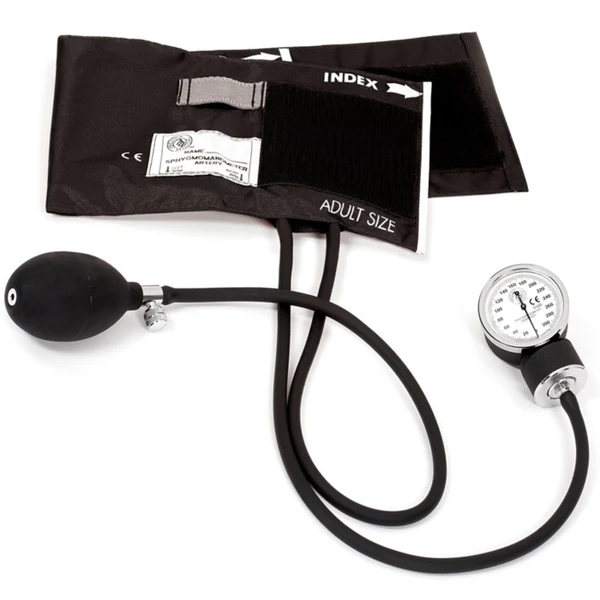
Every EMS student reaches a point in training where manual blood pressure assessment becomes a daily expectation rather than an occasional exercise.
The aneroid sphygmomanometer from MedTechKits is the tool most programs rely on to build that foundational skill, offering a dependable and straightforward mechanism that mirrors real clinical conditions.
Designed with the paramedic student in mind, this blood pressure cuff connects classroom instruction with hands-on patient care.
The latex-free nylon cuff, artery indicator mark, and index-marked dial gauge are all details that support accurate technique from the earliest stages of practice.
Features That Make This BP Cuff Clinical-Ready
The aneroid sphygmomanometer, or BP cuff, comes equipped with features designed to support students performing assessments in clinical and field settings.
An index mark on the dial allows users to confirm the gauge is zeroed before each reading, a step that protects measurement accuracy over the lifespan of the device.
A gauge holder keeps the dial positioned and readable during use, reducing fumbling and supporting a cleaner assessment technique.
The cuff also includes an owner ID label, a small but meaningful detail for students working in shared lab environments where gear can easily be mixed up.
The inflation bulb and air release valve are standard in design, which means any student familiar with the auscultatory method will feel comfortable using this device from day one.
For students currently looking into the field and wondering how long does it take to become an emt, having standard equipment like this ensures that preparation begins early and remains consistent throughout the training cycle.
Latex-Free Nylon Cuff: Built for Sensitive Environments
Latex allergies are a documented concern in healthcare settings, and any tool that comes into direct contact with patients must account for this reality.
The nylon cuff on this sphygmomanometer is fully latex-free, making it appropriate for use on patients who may have latex sensitivities without requiring advance knowledge of the patient's allergy status.
Beyond the allergy consideration, nylon offers practical advantages for a cuff that will be used repeatedly across weeks and months of training.
The material is stain-resistant and easy to wipe down between uses, which supports the hygiene standards expected in any clinical environment.
Understanding the Gauge and Inflation Valve
The dial gauge on the aneroid sphygmomanometer is the core reading interface, and its design reflects the precision that blood pressure measurement requires.
Index markings on the face of the gauge allow the user to track the needle position clearly during deflation, reducing the chance of misreading a value under time pressure.
The standard clinical range markings create a familiar interface for students transitioning between this device, clinical settings, and a resus monitor. The bulb and inflation valve provide controlled, precise deflation for accurate blood pressure assessment.
Releasing air too quickly is one of the most common errors among students learning auscultatory technique, and the valve on this device provides enough resistance to support a slower, more deliberate release.
Grown-Up Person Sizing Range and Placement Accuracy
The cuff on this sphygmomanometer accommodates upper arm circumferences from ten to sixteen inches, a range that covers the majority of adult patients encountered during clinical rotations.
A properly sized cuff is not a minor consideration, as a cuff that is too loose or too tight will produce readings that do not reflect the patient's actual blood pressure.
Accurate placement is equally important, and the artery indicator mark printed on this cuff gives students a clear visual reference for positioning.
The mark is aligned over the brachial artery, which is the target point for auscultatory measurement, and correct alignment at the outset prevents the kind of repositioning mid-assessment that disrupts the reading.
Long-Term Care and Maintenance of Your BP Cuff
A sphygmomanometer that is well cared for maintains its calibration accuracy over a longer period, which directly supports the quality of the readings it produces.
The nylon cuff should be wiped down after each use with an appropriate surface disinfectant, and the tubing should be checked periodically for cracks or weak spots that could allow air to escape during inflation.
Proper storage, combined with routine cleaning, extends the functional life of the device well beyond the duration of a single training program and prepares it for continued use in the field.
Frequently Asked Questions
1. What should I do if I accidentally drop the blood pressure gauge during a shift?
After a drop, check whether the needle returns to the zero mark when the cuff is fully deflated. If it does not sit correctly at zero, the impact may have affected the calibration, and the unit should be inspected and tested before being used on patients again.
2. If the cuff bladder gets damaged, do I need to replace the whole blood pressure cuff?
Not necessarily. The internal bladder can usually be replaced without replacing the entire cuff and gauge assembly. This makes repairs more affordable and allows students or providers to keep using the rest of the equipment if only one component is damaged.
3. What should I do when I need to take a blood pressure on a child or a larger patient?
This cuff is designed for standard adult arm sizes and provides the most accurate readings within that range. Using a cuff that is too small or too large can significantly affect blood pressure accuracy. For pediatric or bariatric patients, it is best to switch to a properly sized cuff designed for that specific population.
4. How well does the cuff resist blood, fluids, and other contamination during patient care?
The nylon material is designed to resist absorbing fluids during routine use. This helps prevent contaminants from immediately soaking into the fabric during assessments. If the cuff becomes heavily contaminated, it should be thoroughly disinfected and allowed to dry completely before being returned to service.
Essential Additions for EMS Work
1. The EMS Backpack That Keeps Your Gear Organized and Ready
2. Upgrade Your EMS Gear with Reliable Trauma Shears That Last