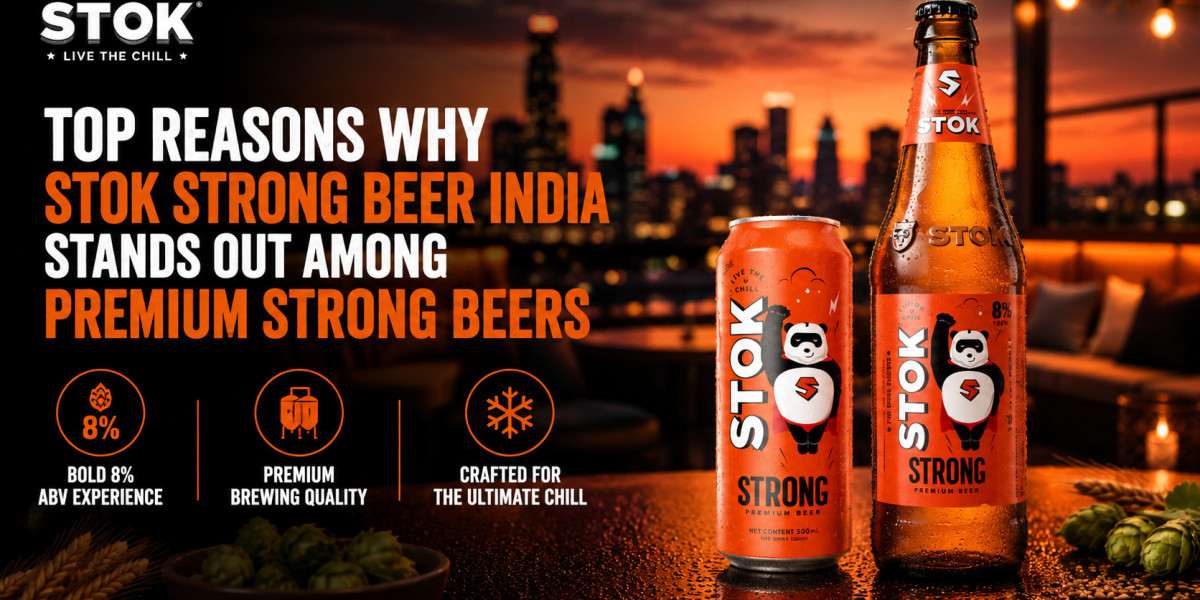

India's beer market crossed ₹40,000 crore in 2023, with the strong beer segment accounting for over 80% of total beer volumes sold. STOK strong beer India has become a notable name in this fast-moving space. The strong lager category is growing because Indian consumers want higher ABV, consistent taste, and accessible pricing all in one product. This post covers what separates strong beers from regular ones, why Indian consumers lean toward them, and what the premium end of this segment actually looks like.
What Makes a Strong Beer Different from Regular Beer?
Strong beer has an ABV (Alcohol by Volume) of 6% or above. Regular lagers typically fall between 4.5% and 5%. The difference is not just strength it is fermentation depth, malt concentration, and final body.
In the Indian context, strong beers use a higher malt-to-adjunct ratio. Brewers ferment at controlled temperatures to retain alcohol without losing taste clarity. The result is a beer that feels full-bodied and delivers a longer finish than a standard mild lager.
How Alcohol Content Is Measured in Indian Beers
ABV is the standard measure used across licensed breweries in India. Excise departments in each state regulate the ABV ceiling for beers sold commercially. Most strong beers in India are brewed to hit 7–8% ABV, which aligns with excise classifications and consumer expectations in the mass-premium segment.
Malt vs. Adjunct What Goes Into Indian Strong Beer
Indian breweries use a mix of barley malt and cereal adjuncts like rice or maize. Strong beer recipes lean more heavily on malted barley for fermentable sugar. This is what drives the higher ABV and also gives strong lagers their characteristic bitterness and depth compared to mild variants.
Why Fermentation Process Matters for Taste
Fermentation temperature and yeast strain selection directly shape how a strong beer tastes. Lower fermentation temperatures produce cleaner lagers with fewer off-notes. Breweries targeting the premium strong beer segment in India invest in controlled fermentation infrastructure to maintain consistency across batches.
Which Strong Beer Is the Best in India?
There is no single answer, but consistent quality, ABV accuracy, and clean taste are the benchmarks serious beer drinkers use. The Indian strong beer market has grown competitive, with regional and national brands fighting for the same shelf space.
The best strong beers in India score high on three criteria: ABV consistency, absence of off-flavours, and value at their price point. Consumers in the 25–40 age group, who make up the largest share of beer drinkers in urban India, prefer brands that deliver a repeatable experience.
What Separates Premium Strong Beer from Mass-Market Options
Premium strong beers in India differentiate on raw material quality, brewing hygiene standards, and packaging. Mass-market options cut costs on malt ratios and rely on adjuncts to push volume. A premium strong lager uses a higher barley-to-adjunct ratio, which is detectable in its taste profile cleaner, firmer, and more consistent.
What Indian Consumers Look for in a Strong Beer
Based on industry research, Indian strong beer buyers prioritise the following:
- High ABV, typically 7% and above
- Clean finish without harsh aftertaste
- Chilled stability flavour holds when served cold
- Affordable pricing most consumers set a ceiling of ₹150–₹200 per bottle
- Widely available at retail and on-trade outlets
These factors shape which brands gain repeat buyers versus one-time trial purchases.
How Regional Availability Affects Strong Beer Preference
India's state-wise excise system means not every strong beer brand is available across all states. Distribution reach is a real competitive factor. Brands with strong ties to regional bottling plants and licensed distributors can maintain shelf presence in key markets something newer entrants often struggle with.
Why Do Consumers Prefer Strong Beer Over Mild Beer in India?
Strong beer outsells mild beer in India by a wide margin. The IWSR estimates that strong beer accounts for more than 80% of total beer consumption by volume in India. This is not a recent trend it has been the structural reality of Indian beer consumption for over a decade.
The primary driver is value perception. At similar price points, a strong beer at 7–8% ABV delivers more than a mild lager at 4.5–5%. For price-sensitive consumers, this matters. For premium buyers, it is about taste depth and brand association.
Price Sensitivity and the Strong Beer Segment
Indian beer drinkers are highly price-conscious. Research from Euromonitor shows that over 65% of beer volume in India is sold in the economy-to-mid-range price bracket. Strong beers that can compete on taste at mid-range prices tend to hold market share better than premium imports that are priced out of the average buyer's reach.
Urban vs. Rural Consumption Patterns
Urban consumers trend toward premium strong lagers with distinct packaging and higher ABV. Rural and semi-urban consumers prioritise price and availability. This bifurcation means that strong beer brands need two distinct strategies one for metro retail and premium on-trade, another for wide-distribution formats in Tier 2 and 3 markets.
What Is the Alcohol Content of Strong Beers in India?
Most Indian strong beers sit between 6% and 8% ABV. A few brands push to 8.9%, which is the upper ceiling for beer classification under Indian excise rules in most states. Anything above that typically falls under a different licensing category.
ABV accuracy matters for both regulatory compliance and consumer trust. Brands that have faced complaints about inconsistent ABV have lost shelf space. India's FSSAI regulations require that ABV declarations on labels must be accurate within a specified tolerance band.
How ABV Labelling Works Under Indian Regulations
FSSAI and state excise departments jointly govern beer labelling. Every bottle must display the ABV percentage, net volume, and batch number. Breweries undergo periodic checks to verify that the declared ABV matches the actual product. Non-compliance results in fines and potential delisting from retail and on-trade outlets.
Does Higher ABV Mean Better Beer?
Not automatically. ABV is one variable. Taste profile, finish, and consistency are equally important. A beer at 7% ABV that tastes balanced and clean will outsell a beer at 8% ABV with a harsh finish. The Indian market has shown this pattern repeatedly brands that prioritise taste refinement at a competitive ABV tend to build loyal consumer bases faster than those chasing the highest ABV figure.
Conclusion
Strong beer in India is a category driven by consumer demand for ABV, value, and consistent quality. STOK strong beer India enters this space with a focus on the premium end of the strong lager segment where malt quality, fermentation standards, and taste consistency define success. As the Indian beer market grows and consumers become more discerning, the brands that win will be the ones that deliver a reliable product at a competitive price point. The question for every strong beer brand in India is not just how strong, but how good and whether that quality holds up from the first sip to the last.
I comply with all applicable laws, regulations, and government directives relevant to my jurisdiction and industry.