
Real estate has traditionally been one of the least liquid asset classes in global finance. Once a property is purchased, converting it back into cash often requires lengthy legal processes, intermediaries, and uncertain market timing. This lack of liquidity has historically limited real estate’s flexibility as an investment asset.
Real estate tokenization development solutions are changing this structure by enabling property ownership to be represented as blockchain-based tokens. More importantly, these systems make it possible for those tokens to be traded on secondary markets, transforming real estate into a more dynamic and accessible financial instrument.
Understanding Real Estate Tokenization
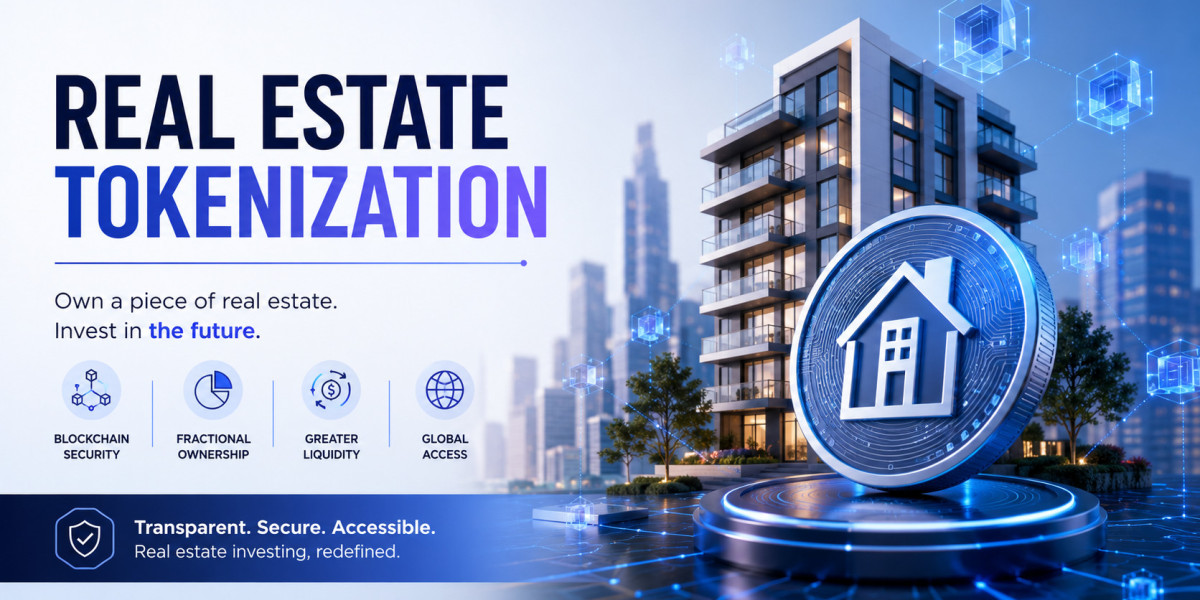
Real estate tokenization development solutions refer to the technical frameworks, blockchain infrastructure, and smart contract systems used to digitize property ownership. These solutions convert physical real estate assets into digital tokens that represent ownership rights or fractional shares.
At the core of these systems are smart contracts that define how tokens are issued, transferred, and regulated. Each token is recorded on a blockchain ledger, ensuring transparency, immutability, and real-time traceability of ownership changes. Beyond token creation, these solutions also include compliance layers, investor onboarding systems, and marketplace integration capabilities that enable active trading environments.
What Is a Secondary Market in Tokenized Real Estate?
A secondary market is a platform where previously issued tokens are bought and sold between investors, rather than directly from the issuer or property developer. In traditional real estate, secondary markets are slow and complex due to legal documentation and ownership transfer requirements. In tokenized systems, secondary markets operate digitally, allowing investors to trade property-backed tokens in a similar way to stocks or digital assets. This significantly improves liquidity and market efficiency.
How Tokenization Development Solutions Enable Secondary Market Trading
1. Digital Representation of Property Ownership
The foundation of secondary market trading lies in converting real estate tokenization ownership into digital tokens. Each token represents a defined share of a property asset. Once tokenized, these assets can be listed, transferred, and traded digitally without requiring manual re-registration of property records for every transaction. This digital representation is what makes real-time secondary trading possible.
2. Smart Contract-Based Transfer Mechanisms
Smart contracts automate the entire trading process. When a buyer purchases a tokenized real estate share, the smart contract verifies conditions such as ownership validity, compliance status, and payment confirmation. Once conditions are met, the contract executes an automatic transfer of ownership on the blockchain. This eliminates manual intervention and significantly reduces settlement time compared to traditional real estate transactions.
3. Integration with Secondary Marketplaces
Tokenization development solutions often include or integrate with decentralized or centralized marketplaces where investors can list and trade real estate tokens. These marketplaces function similarly to stock exchanges, matching buyers and sellers in real time. This integration provides liquidity by ensuring that tokenized assets are continuously tradable. Without marketplace connectivity, tokenized assets would remain static and illiquid, limiting their financial utility.
4. Fractional Ownership Enables Active Trading
One of the key enablers of secondary trading is fractional ownership. Instead of requiring full property purchase, tokenization divides real estate into smaller units that can be individually traded. This allows investors to enter and exit positions more easily, increasing trading volume and market participation. Fractional ownership also makes pricing more dynamic, as asset value is distributed across multiple holders.
5. Real-Time Settlement and Reduced Friction
Traditional property transactions can take days or weeks to settle due to paperwork, escrow processes, and legal verification. Tokenization development solutions eliminate these delays through blockchain-based settlement. Transactions are recorded and finalized in near real time, reducing counterparty risk and enabling faster market cycles. This real-time settlement capability is essential for active secondary markets.
6. Automated Compliance and Regulatory Controls
Secondary trading of real estate tokens must comply with financial and property regulations. Tokenization solutions embed compliance logic directly into smart contracts. This includes identity verification, investor eligibility checks, and jurisdictional restrictions. Automated compliance ensures that only qualified participants can trade certain tokens, maintaining legal and regulatory integrity within secondary markets.
7. Transparent Price Discovery Mechanisms
In traditional real estate, pricing is often opaque and influenced by negotiations, intermediaries, and limited market data. Tokenized secondary markets introduce transparent price discovery through continuous trading activity. Because tokens are traded digitally, market-driven pricing emerges based on supply and demand. This creates more accurate and real-time valuation of real estate assets.
Benefits of Secondary Market Trading in Tokenized Real Estate
Secondary market trading introduces several structural advantages:
- Increased liquidity for traditionally illiquid assets
- Faster entry and exit opportunities for investors
- Broader participation from retail and institutional investors
- More efficient capital allocation across real estate portfolios
- Improved asset valuation through market-driven pricing
For developers and asset managers, this also means better access to continuous funding cycles and reduced reliance on long-term capital lock-ins.
Challenges in Enabling Secondary Market Trading
Despite its advantages, secondary trading of tokenized real estate faces several challenges: Regulatory fragmentation remains a major issue, as different jurisdictions classify tokenized assets differently. Liquidity can also vary depending on market adoption and investor participation levels.
Additionally, integrating traditional real estate systems with blockchain infrastructure requires careful technical design. Security risks, including smart contract vulnerabilities and platform-level attacks, must also be addressed.
Future of Secondary Markets in Tokenized Real Estate
As Web3 infrastructure matures, secondary markets for tokenized real estate are expected to become more sophisticated and widely adopted. Integration with decentralized finance (DeFi) platforms may allow real estate tokens to be used as collateral for lending or liquidity provision.
Institutional participation is also expected to grow, especially as regulatory clarity improves. Over time, tokenized real estate may trade alongside traditional financial assets in unified global marketplaces. This evolution could transform real estate into a continuously liquid, globally accessible asset class.
Conclusion
Real estate tokenization development solutions are fundamentally reshaping how property assets are traded by enabling efficient secondary market systems. Through digital ownership representation, smart contract automation, fractional ownership, and marketplace integration, these solutions eliminate many of the inefficiencies of traditional real estate transactions.
Secondary market trading introduces liquidity, transparency, and flexibility into an otherwise rigid asset class. As adoption increases, tokenized real estate markets are likely to become a core component of the modern financial ecosystem, bridging the gap between physical assets and digital finance.