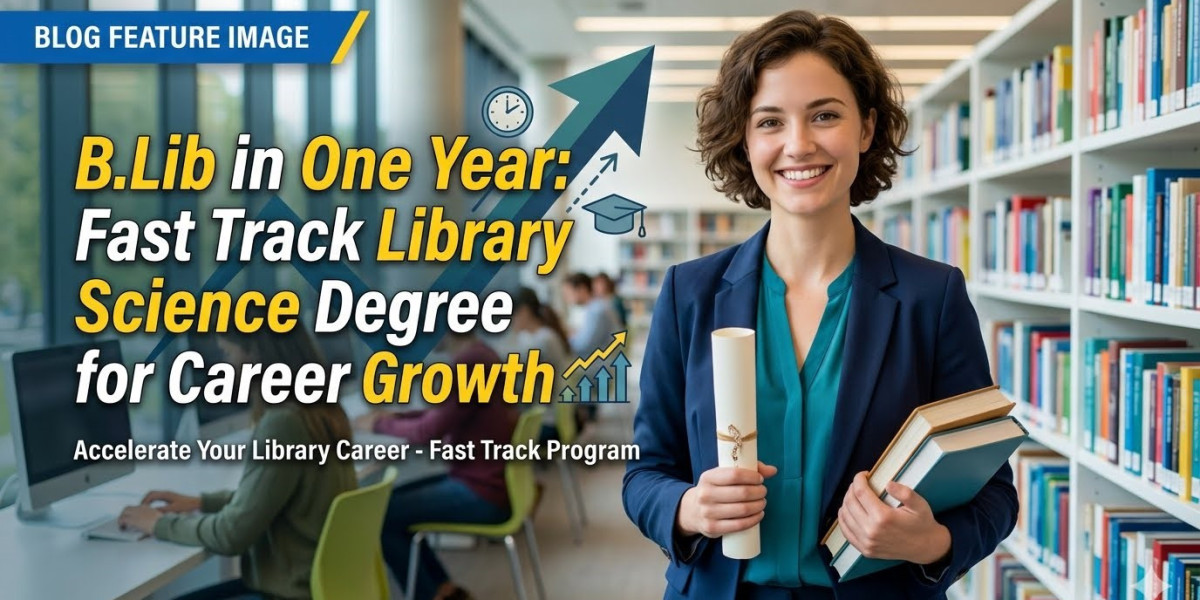

In today's information-driven world, libraries are no longer limited to bookshelves and reading rooms. Modern libraries serve as knowledge hubs that manage digital resources, research databases, archives, and information systems. As a result, qualified library professionals are in demand across schools, colleges, universities, government institutions, research centers, and corporate organizations.
A Bachelor of Library Science (B.Lib) is a professional degree designed for individuals interested in information management, library administration, and knowledge organization. For eligible candidates who wish to complete their qualification efficiently, a B.Lib in One Year program offers an excellent opportunity to gain professional expertise and enhance career prospects.
What is B.Lib in One Year?
A B.Lib in One Year is a professional undergraduate-level program in Library and Information Science that equips students with the knowledge and skills required to manage libraries, information centers, archives, and digital resources.
The program focuses on:
Library Management
Information Organization
Cataloging and Classification
Digital Library Systems
Information Technology Applications
Research and Documentation
The course is particularly suitable for graduates who want to enter the library and information science profession or enhance their qualifications for educational and administrative careers.
Why Choose a B.Lib Degree?
The demand for qualified library professionals continues to grow as educational institutions and organizations increasingly rely on effective information management systems.
1. Professional Qualification
A B.Lib degree provides specialized training required for library and information science careers.
2. Growing Career Opportunities
Library professionals are needed in:
Schools
Colleges
Universities
Research Institutions
Government Departments
Digital Libraries
Corporate Knowledge Centers
3. Diverse Employment Options
Graduates can work in both traditional and digital information management environments.
4. Foundation for Advanced Studies
After completing B.Lib, students can pursue:
M.Lib (Master of Library Science)
Information Science Programs
Documentation and Archival Studies
Knowledge Management Courses
Research Programs
5. Technology-Oriented Career
Modern library science integrates information technology, digital databases, and online information systems.
Eligibility Criteria for B.Lib in One Year
Eligibility requirements may vary depending on institutional policies.
Generally, candidates must:
Hold a bachelor's degree from a recognized university.
Meet minimum percentage requirements specified by the institution.
Submit necessary academic documentation.
Fulfill admission guidelines established by the university.
Students should verify eligibility requirements before applying.
Admission Process for B.Lib in One Year
The admission process is usually simple and straightforward.
Step 1: Application Submission
Candidates complete and submit the admission form.
Step 2: Document Verification
Required documents may include:
Graduation Mark Sheets
Degree Certificate
Transfer Certificate
Migration Certificate
Identity Proof
Passport-Size Photographs
Step 3: Eligibility Assessment
The institution evaluates academic qualifications and verifies eligibility.
Step 4: Admission Confirmation
Eligible candidates receive admission approval and course information.
Step 5: Coursework and Evaluation
Students complete assignments, practical training, projects, and examinations as per academic requirements.
Subjects Covered in B.Lib Program
The curriculum is designed to provide a strong foundation in library and information science.
Library Classification
Students learn methods for organizing and categorizing library resources.
Cataloging Theory and Practice
Focuses on creating bibliographic records and information retrieval systems.
Library Management
Covers administration, planning, budgeting, and management of library services.
Information Sources and Services
Introduces various information resources and reference services.
Information Technology in Libraries
Explores the use of computers, software, and digital tools in library operations.
Research Methodology
Teaches research techniques and information analysis methods.
Digital Libraries
Focuses on managing electronic resources and online information systems.
Documentation and Information Retrieval
Covers techniques for storing, organizing, and retrieving information efficiently.
Benefits of B.Lib in One Year
A Bachelor of Library Science degree offers several academic and professional advantages.
Specialized Professional Knowledge
Students gain expertise in library management and information systems.
Career Stability
Educational institutions and government organizations consistently require qualified library professionals.
Digital Skills Development
The course includes training in digital information management and library automation.
Opportunities in Multiple Sectors
Graduates can work in academic, corporate, research, and public library environments.
Preparation for Higher Studies
The degree serves as a foundation for advanced education and specialization.
Career Opportunities After B.Lib
A B.Lib degree opens the door to various career opportunities.
Librarian
Manage library collections, services, and user support systems.
Assistant Librarian
Support library administration and information services.
Information Officer
Handle information management and documentation activities.
Documentation Officer
Organize, maintain, and retrieve institutional records and documents.
Digital Library Specialist
Manage online databases, digital archives, and electronic resources.
Knowledge Management Executive
Support information organization within corporate environments.
Research Assistant
Assist researchers in locating, organizing, and managing information resources.
Salary Prospects After B.Lib
Salary depends on factors such as:
Experience
Educational Qualifications
Institution Type
Location
Technical Skills
Professionals with expertise in digital libraries, information technology, and knowledge management often enjoy better salary prospects and career growth opportunities.
Essential Skills Developed Through B.Lib
The B.Lib program helps students develop valuable professional competencies.
Information Management Skills
Students learn to organize and manage large volumes of information effectively.
Research Skills
The course develops advanced information retrieval and research capabilities.
Communication Skills
Library professionals assist users in accessing information and resources.
Technical Skills
Students gain knowledge of library automation software and digital information systems.
Organizational Skills
Managing resources and information systems requires strong organizational abilities.
Is B.Lib in One Year a Good Career Choice?
Yes. Library and Information Science remains a valuable field due to the growing need for organized information management in educational, governmental, and corporate environments.
The increasing adoption of digital libraries and online information systems has further expanded career opportunities for qualified professionals.
A B.Lib degree provides both traditional library skills and modern digital competencies, making graduates highly adaptable in today's knowledge economy.
Who Should Pursue B.Lib in One Year?
This program is ideal for:
Graduates interested in library science careers
Teachers seeking additional qualifications
Educational professionals
Information management enthusiasts
Individuals interested in research and documentation
Candidates preparing for librarian positions
Tips for Choosing the Right B.Lib Program
Before enrolling, consider the following:
Verify Institutional Recognition
Choose a recognized institution with established academic standards.
Review Course Curriculum
Ensure the program includes digital library management and information technology components.
Check Practical Training Opportunities
Look for programs that offer hands-on experience and project work.
Compare Fees
Evaluate tuition fees and additional academic expenses.
Explore Career Support Services
Consider institutions that provide placement assistance and career guidance.
Conclusion
A B.Lib in One Year program can be an excellent opportunity for graduates seeking a professional qualification in library and information science. The course equips students with essential knowledge in library management, digital information systems, cataloging, research, and documentation.
With increasing demand for information professionals in educational institutions, research organizations, and corporate sectors, a B.Lib degree offers strong career prospects and opportunities for further academic growth. Before enrolling, students should carefully review eligibility criteria, curriculum, institutional recognition, and career support services to make an informed decision about their future.
Frequently Asked Questions (FAQs)
What is B.Lib?
B.Lib stands for Bachelor of Library Science, a professional degree focused on library and information management.
Who can apply for B.Lib?
Candidates who have completed a bachelor's degree from a recognized university are generally eligible.
Can I pursue M.Lib after B.Lib?
Yes. A B.Lib degree provides eligibility for Master of Library Science (M.Lib) programs.
Is B.Lib a good career option?
Yes. The degree offers opportunities in educational institutions, research organizations, government departments, and corporate information centers.
Are digital library skills included in B.Lib?
Most modern B.Lib programs include training in digital libraries, information technology, and electronic resource management.