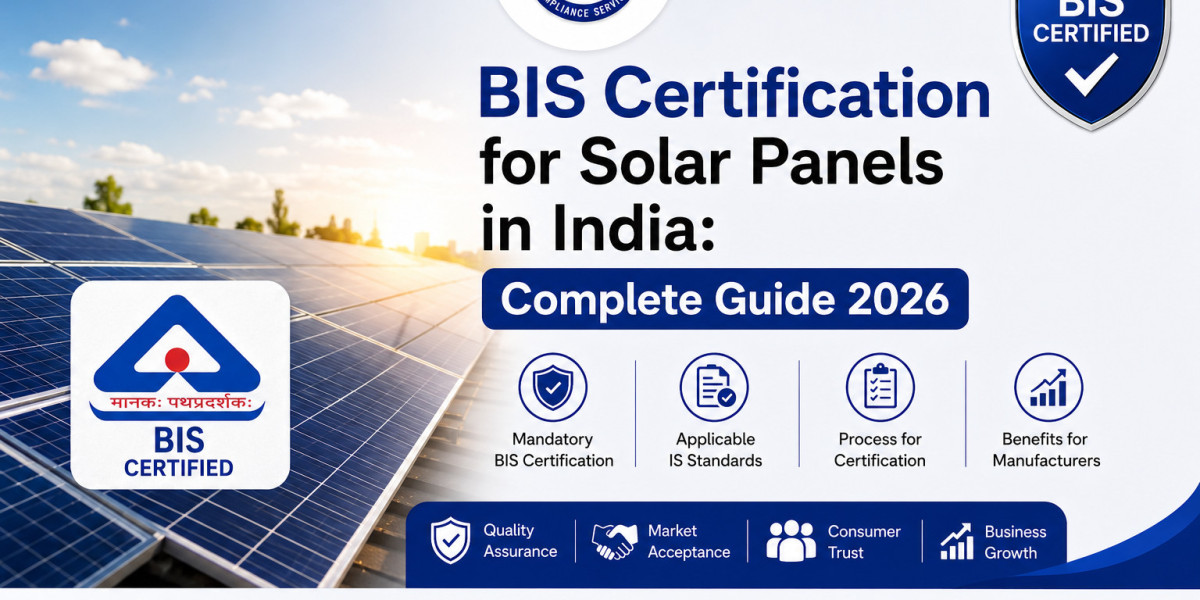

India’s renewable energy sector is growing rapidly in 2026 due to increasing investments in solar energy projects, government sustainability programs, industrial power solutions, and residential solar installations. As demand for solar panels and solar equipment increases, the Government of India is also strengthening quality and safety regulations for renewable energy products.
To ensure product reliability and consumer safety, many solar products now require compliance with Indian quality standards under the Bureau of Indian Standards (BIS).
Manufacturers, importers, EPC companies, project developers, and foreign exporters often ask:
“Is BIS certification mandatory for Solar Panels in India?”
The answer is yes for many regulated solar products. BIS certification is becoming increasingly important for manufacturers and importers operating in the Indian renewable energy market.
Because the certification process involves technical testing, documentation, factory inspection, and regulatory coordination, many businesses prefer professional consultancy support for smooth approvals.
In 2026, UMSPCS is becoming one of the trusted consultancy providers helping solar manufacturers and importers manage BIS certification for solar panels in India and renewable energy compliance across India.
What is BIS Certification for Solar Panels?
BIS certification confirms that solar products comply with Indian quality, safety, and technical standards regulated by the Bureau of Indian Standards.
The certification helps ensure:
Product safety
Technical reliability
Manufacturing quality
Performance consistency
Consumer protection
The Government of India continues strengthening quality compliance requirements for renewable energy products under various regulatory frameworks.
(Bureau of Indian Standards)
Why BIS Certification is Important for Solar Panels
Solar panels operate in demanding environmental conditions and directly affect:
Energy generation
Electrical safety
Long-term durability
System efficiency
Poor-quality solar products may cause:
Reduced power generation
Fire risks
System failures
Electrical hazards
BIS certification helps improve product quality and reliability across the solar industry.
Read More :- ISI Certification In India
Products That May Require BIS Certification
Various renewable energy and solar-related products may require BIS compliance including:
Solar photovoltaic (PV) modules
Solar panels
Solar inverters
Solar power systems
Solar connectors
Battery systems
Electrical safety components
The exact applicability depends on:
Product category
Technical specifications
Applicable Indian Standards
Government notifications
Applicable Standards for Solar Products
Solar products are generally tested according to applicable Indian Standards and technical requirements.
The standards may relate to:
Electrical safety
Product durability
Environmental performance
Technical reliability
System compatibility
Correct applicability analysis is extremely important before filing certification applications.
Read More:- FMCS Consultant In India
Step-by-Step BIS Certification Process for Solar Panels
Step 1: Product Applicability Analysis
The first step is identifying:
Applicable Indian Standard (IS code)
Product category
Mandatory compliance requirements
Certification scheme applicability
Incorrect classification may lead to:
Application rejection
Testing mismatch
Approval delays
Step 2: Documentation Preparation
Manufacturers and importers must prepare technical and regulatory documents.
Typical documents may include:
Factory license
Product specifications
Technical drawings
Quality control records
Product manuals
Trademark documents
Authorization letters
Documentation accuracy is critical for smooth approval.
Step 3: Product Testing
Solar products must generally be tested in BIS-recognized laboratories according to applicable Indian Standards.
Testing may verify:
Electrical safety
Module performance
Environmental durability
Technical reliability
Product quality
Testing is one of the most important stages of certification.
Why Product Testing is Important
Testing helps confirm:
Safe operation
Long-term performance
Energy efficiency
Product consistency
Products failing testing cannot proceed to certification approval.
Step 4: BIS Application Filing
After successful testing, businesses must submit the application through official BIS systems.
Incorrect filing may lead to:
Technical queries
Processing delays
Application rejection
Professional filing support helps reduce errors.
Step 5: Factory Inspection
For many BIS schemes, factory inspections are conducted by BIS authorities.
Inspectors may review:
Manufacturing systems
Quality control arrangements
Production capability
Internal testing facilities
Technical records
Proper audit preparation is essential.
Step 6: Grant of BIS Certification
After successful verification, BIS grants certification approval.
Once approved:
Products can legally enter the Indian market
Manufacturers may use applicable BIS markings
Businesses can participate in projects and tenders
Read More :- MTCTE Certification
Why Importers Need BIS Compliance for Solar Products
Imported solar products must comply with Indian regulations before customs clearance.
Importers may require:
BIS certification
Technical documentation
Product testing reports
Labeling compliance
Without proper approval, products may face:
Customs detention
Shipment rejection
Legal penalties
Project delays
Importance of Labeling Compliance
Solar products must follow Indian labeling requirements.
Labels may require:
Manufacturer details
Product specifications
Safety information
BIS license details
Importer information
Incorrect labeling may create regulatory and customs-related issues.
Common Challenges Businesses Face
Many solar businesses struggle with:
Product classification confusion
Technical documentation errors
Product testing delays
Factory audit preparation
Import compliance management
Regulatory coordination
Without proper guidance, these issues may significantly delay approvals.
Why Foreign Manufacturers Need Professional Support
Foreign solar manufacturers exporting to India often face additional challenges such as:
Indian compliance procedures
BIS documentation requirements
Product testing coordination
Factory inspection preparation
Customs compliance
Professional consultants help international businesses simplify Indian regulatory procedures.
Growing Solar Industry in India
India’s solar industry is expanding rapidly because of:
Government renewable energy targets
Industrial solar adoption
Residential solar demand
EV infrastructure growth
Sustainability initiatives
As the industry grows, compliance enforcement is also increasing.
Why Businesses Hire BIS Consultants for Solar Products
Professional consultants help businesses:
Identify applicable standards
Coordinate testing
Prepare documentation
Manage BIS filing
Prepare for audits
Handle import compliance
Monitor regulatory updates
This helps businesses reduce delays and compliance risks.
Why Businesses Choose UMSPCS
UMSPCS provides BIS consultancy and regulatory compliance services for solar manufacturers, importers, exporters, EPC companies, and renewable energy businesses across India.
The company assists businesses with:
BIS certification
Product testing coordination
Factory inspection preparation
FMCS certification
Import compliance management
Regulatory documentation
WPC ETA approval
Long-term compliance support
Businesses increasingly prefer consultants offering complete compliance solutions under one platform.
Future of Solar Compliance in India
India’s renewable energy compliance system will continue becoming stricter because of:
Product quality enforcement
Consumer safety initiatives
Renewable energy expansion
Industrial standardization
Import quality monitoring
Manufacturers and importers must now treat compliance as a long-term business requirement.
Final Thoughts
BIS certification for solar panels and renewable energy products is becoming increasingly important in India’s growing solar market. The certification process involves multiple technical and regulatory stages including applicability analysis, documentation preparation, product testing, factory inspection, and compliance management.
Businesses that fail to comply properly may face customs delays, project disruption, product rejection, and legal complications.
Working with experienced consultants like UMSPCS helps solar manufacturers and importers simplify BIS certification procedures and maintain smooth long-term compliance operations in India.
FAQs
1. Is BIS certification mandatory for solar panels in India?
Many solar and renewable energy products require BIS compliance according to applicable Indian regulations.
2. Why is BIS certification important for solar products?
BIS certification helps ensure product safety, quality, technical reliability, and long-term performance.
3. Which solar products may require BIS certification?
Solar panels, PV modules, solar inverters, and related renewable energy products may require certification.
4. Is product testing mandatory for solar panel certification?
Yes. Products are generally tested according to applicable Indian Standards.
5. Why is factory inspection important for BIS approval?
BIS officials verify manufacturing systems, quality control processes, and production capability.
6. Can imported solar panels be sold without BIS compliance?
Non-compliant products may face customs detention, rejection, or legal restrictions.
7. Why is labeling compliance important for solar products?
Incorrect labeling may create customs issues and regulatory non-compliance.
8. Why do foreign manufacturers hire BIS consultants?
Consultants help businesses manage testing, documentation, audits, filing, and import compliance efficiently.
9. How can UMSPCS help solar businesses?
UMSPCS provides consultancy support for BIS certification, testing coordination, factory inspections, and regulatory compliance.
10. Why are solar compliance regulations becoming stricter in India?
India is strengthening renewable energy quality standards, consumer safety, and product reliability regulations.
Source:- https://www.linkedin.com/pulse/bis-certification-solar-panels-india-complete-guide-2026-mtcte-nhrvc