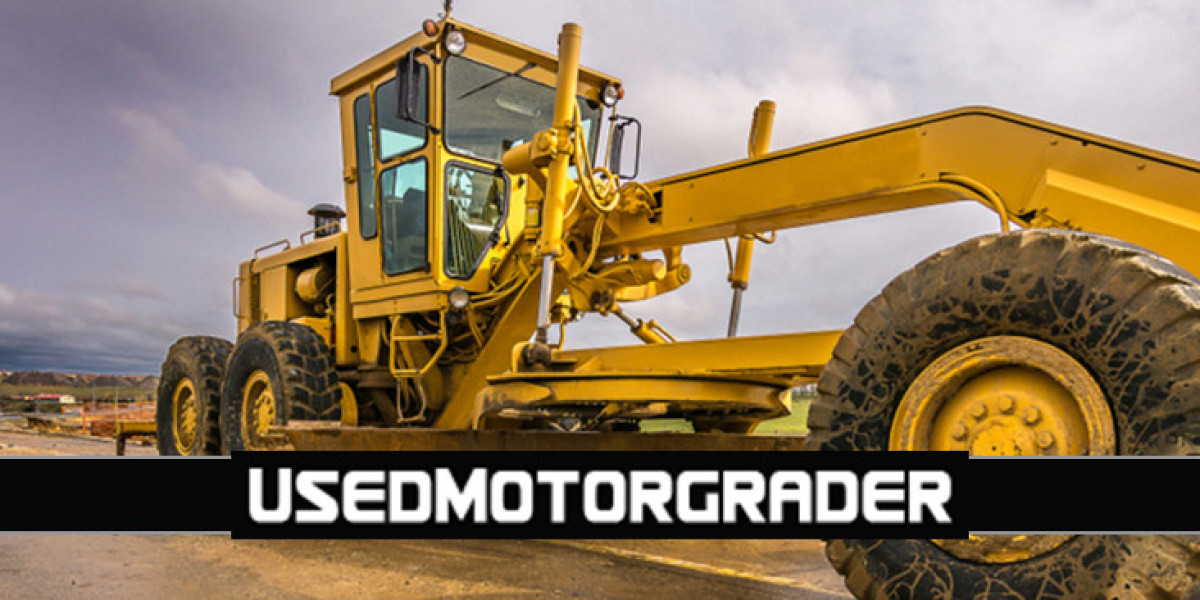

Most purchasers who are assessing a used motor grader for sale spend the majority of their time examining the engine, hydraulics, and the condition of the blade, and ignore the tires. That is a costly mistake. The tires of a motor grader are not merely rubber on rims in hot weather environments. They are a record of how the machine was used, how hard it was pushed, and what mechanical issues might be lurking behind the scenes. Not having a proper tire check in a hot climate is not merely an overlooked detail, but rather a direct road to unforeseen cost and operational breakdown.
How Extreme Heat Breaks Down Grader Tires
The greatest enemy of rubber is heat. Hot pavement causes tire rubber degradation, which enhances the possibility of cracking, separation of belts, and irregularities in the treads. Heat also causes dry-rot, or sidewall cracking, which happens when the oils in the rubber evaporate, making tires more prone to cracking and blowouts.
When a motor grader works long passes on bare road surfaces, this damage builds up rapidly. Although the air temperature may be 90°F, the pavement may be over 130°F, and tires in constant contact with that surface experience faster degradation and have greater chances of cracking and tire separation. Visual inspection often fails to show the deterioration caused by age until the damage is severe, and internal structural damage can develop long before the damage is obvious.
The most important indicators of heat-related tire damage to be checked during inspection are:
Sidewall cracking or dry rot is a sign of long-term heat exposure and evaporation of oil through the rubber compound.
Bulges or deformations on the surface indicate internal separation of belts under the tread.
Hardened rubber, which can be detected by pressing firmly on the sidewall, healthy tires are not hard, but pliable.
Separation of treads along the edges of the shoulders is an indication of repeated high-temperature cycling.
Tire Wear Patterns Reveal Hidden Mechanical Problems
A tire does not simply wear; it tells you just what the machine underneath has been going through. It is among the least considered inspection methods when assessing a used motor grader for sale in hot climates, where wear and tear accumulate more rapidly and hide more damage.
Each wear pattern will tell you precisely what is wrong with the machine beneath: feathering means alignment, cupping means suspension, and shoulder wear means inflation or axle issues. These signals have a new meaning on a motor grader since the machine depends on the accuracy of tandem balance and articulation geometry to grade successfully.
Graders are delicate machines, and mismatched tires can cause myriad problems, such as excessive wear of the drivetrain, premature wear of tires, increased fuel consumption, and underperformance. Ideally, all tires on a motor grader should be of the same type, tread type, and age.
Pay close attention to these wear-pattern warning signs when inspecting:
Feathering over the tread face indicates misalignment of toe-in or toe-out in the front axle or articulation system.
Cupping or scalloping of the rear tandem tires is often an indication of imbalanced wear of the tandem chain drive or unequal tire diameter.
Unilateral rear tire wear on the tandem axles indicates that the tandem axles are not running perpendicular to the frame.
Lateral wear on the left side compared to the right side is usually a sign of articulation issues or a stressed, possibly bent frame.
The Real Cost Impact on Your Investment
The state of tires is the key factor that can make a seemingly affordable used motor grader for sale a trap. A typical set of six 17.5-25 bias-ply tires on a motor grader would cost about $7,500. While radial tires cost significantly more, they can last two to three times longer. It is a huge variable cost that should be considered in any purchase decision.
In addition to the replacement cost, bear in mind the following financial risks associated with the poor state of tires:
Immediate Capital Outlay: Any savings realized on the purchase price of the machine can be erased by a full tire replacement required soon after the purchase.
Grade Inaccuracy: Instability in pressure caused by heat-damaged tires impacts the calibration of the grade control system and decreases the accuracy of grading, reducing productivity.
Safety and Downtime: Field blowouts lead to project delays, emergency service expenses, and possible safety incidents that result in liability.
Tire pressure can increase by 1 to 2 PSI for every 10 degrees of temperature increase. Overinflated tires wear out prematurely and are more likely to blow out. This pressure buildup is a daily occurrence in a hot climate.
Do Not Be Fooled by New Tires
When looking at any used motor grader for sale, brand-new tires must raise questions rather than reassurance. To conceal deeper alignment, tandem, or frame problems that led to accelerated wear on the previous set, fresh rubber on an old machine can be used to mask deeper mechanical faults.
Always inquire why the tires were changed, when they were changed, and whether the root cause was addressed. A machine whose tires are new and whose service records do not explain the replacement should be subjected to additional scrutiny in all wear-sensitive systems.
Inspection must never be limited to a glance. A brief test run, preferably on a straight, flat surface, will show whether the machine is tracking true, whether there is abnormal vibration in the tandem, and whether the tires wear under load in a consistent pattern. Bouncing, shimmying tires, or tires that cause the machine to drift off course are indicative of mechanical issues that no new coat of paint can conceal.
FAQs
1. How often should motor grader tires be inspected in hot climates?
A: They must be inspected before each major shift, and a detailed inspection should be performed, including pressure measurement and sidewall inspection, at least once per week during active use in high-heat environments.
2. Can hot weather alone ruin grader tires even without heavy use?
A: Yes. Even on machines that are stored outside or used lightly, UV exposure and extreme temperature fluctuations are as important as hours of use in causing rubber compounds to harden, oxidize, and crack.
3. What tire size is most common on motor graders?
A: The most popular rear tire size is 17.5-25, and front tires are usually 14.00-24. Different machines have different configurations, and using mismatched sizes on the same axle can lead to issues with the drives and grade calibration.
4. Is tire condition always reflected in the machine's asking price?
A: Not reliably. The cost of imminent tire replacement is not always considered by sellers; therefore, buyers should compute the replacement cost on their own and negotiate accordingly before buying any used motor grader for sale.