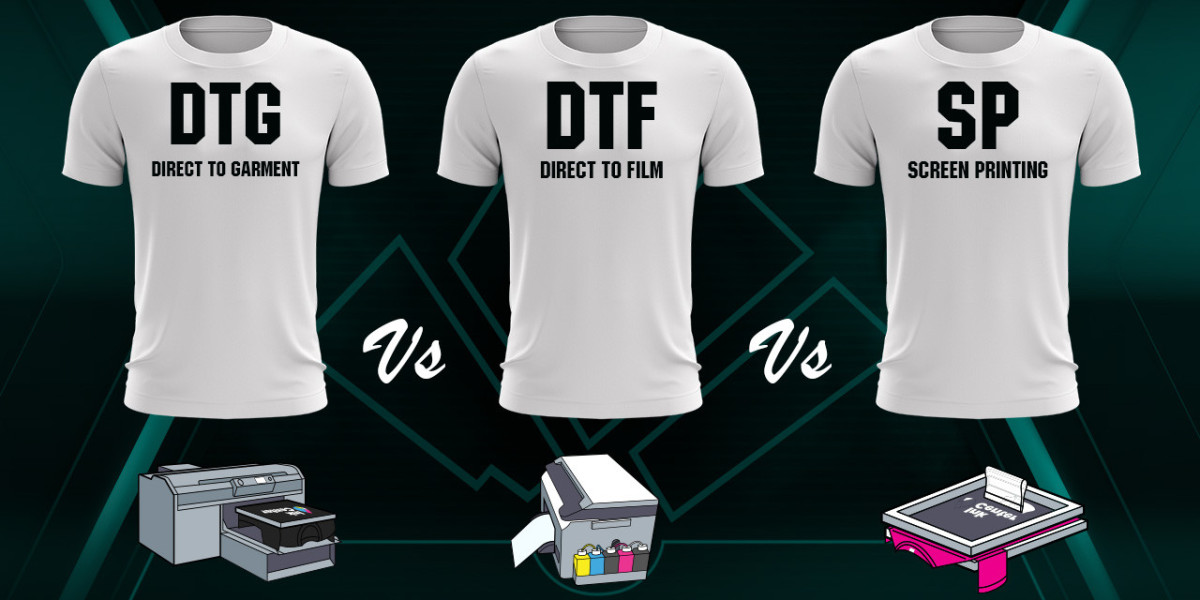

The custom apparel industry has experienced a major transformation in recent years due to advancements in digital printing technology. Among these innovations, Direct-to-Film printing has emerged as one of the most influential solutions for businesses looking to improve quality, speed, and flexibility. DTF printing has rapidly gained popularity because it allows detailed and vibrant designs to be transferred onto various fabrics without the limitations associated with traditional printing methods.
As printing businesses continue to evolve, many companies are also exploring UV DTF Printers to expand beyond fabric applications and create customized designs on hard surfaces such as wood, glass, acrylic, and metal. This growing flexibility demonstrates how modern printing technologies are reshaping the custom product market and creating new opportunities for apparel businesses worldwide.
Understanding DTF Printing Technology
DTF printing is a process that involves printing designs onto a special transfer film using water-based inks. After printing, adhesive powder is applied to the design, which is then cured and transferred onto fabric using heat and pressure. Unlike older printing methods, DTF technology does not require extensive fabric preparation or complicated setup procedures.
This process allows businesses to print high-quality images with exceptional detail and vibrant colors on multiple fabric types. Cotton, polyester, blends, and even performance fabrics can all be customized using DTF printing. The ability to work with different materials makes DTF technology highly attractive for businesses serving diverse customer needs.
The simplicity of the printing process also helps reduce production time and labor costs. Businesses can complete both small and large orders more efficiently while maintaining consistent print quality.
Improved Design Flexibility
One of the primary reasons DTF printing is transforming the apparel industry is its unmatched design flexibility. Traditional methods such as screen printing often require separate screens for every color and design variation, making customization expensive and time-consuming. DTF printing eliminates many of these limitations.
With DTF technology, businesses can easily print complex graphics, gradients, fine details, and full-color images without increasing setup costs. This allows apparel companies to offer personalized products with greater creative freedom. Customers can request unique designs, small-batch orders, or custom branding solutions without major production challenges.
The ability to quickly modify designs also helps businesses respond to changing market trends. Seasonal collections, promotional merchandise, and limited-edition apparel can be produced more efficiently, giving companies a competitive advantage in fast-moving markets.
Cost-Effective Production
Cost efficiency is another major factor driving the popularity of DTF printing. Traditional printing techniques often involve high setup expenses, especially for small orders. Screen preparation, material waste, and labor-intensive processes can significantly increase operational costs.
DTF printing reduces many of these expenses by simplifying production workflows. Since there is minimal setup required, businesses can process small custom orders profitably without sacrificing quality. This flexibility benefits startups, small businesses, and online print-on-demand companies that rely on personalized production models.
Additionally, DTF printing reduces material waste because designs are printed digitally with greater precision. Efficient ink usage and streamlined workflows help businesses improve profit margins while maintaining competitive pricing.
High-Quality and Durable Prints
Customers expect apparel designs to remain vibrant and durable after repeated washing and daily wear. DTF printing has gained recognition for producing high-quality prints that maintain their appearance over time.
The printing process creates strong adhesion between the design and the fabric, resulting in excellent durability. Designs remain flexible and resistant to cracking, peeling, or fading. This durability improves customer satisfaction and encourages repeat purchases.
The color vibrancy achieved through DTF technology is another important advantage. Bright colors, sharp lines, and detailed artwork can be reproduced with impressive accuracy. Businesses that prioritize quality can use DTF printing to establish a strong reputation in competitive apparel markets.
Faster Production and Scalability
Production speed plays a critical role in the success of modern apparel businesses. Consumers increasingly expect fast turnaround times, especially for online custom orders. DTF printing helps businesses meet these expectations through efficient production processes.
Unlike traditional printing methods that require lengthy preparation, DTF printing allows designs to move directly from digital files to production. Businesses can process orders quickly and reduce delays caused by setup procedures. Faster production enables companies to handle larger order volumes and increase operational efficiency.
Scalability is another key benefit of DTF technology. Small businesses can begin with compact desktop printers and gradually upgrade to industrial systems as demand increases. This scalability allows businesses to expand without completely restructuring their production operations.
The adaptability of DTF printing also supports a wide range of apparel products, including t-shirts, hoodies, sportswear, tote bags, and uniforms. Businesses can diversify their product offerings while maintaining efficient production workflows.
Eco-Friendly Printing Advantages
Environmental sustainability has become an important consideration in the apparel industry. Consumers are increasingly supporting businesses that adopt eco-friendly manufacturing practices. DTF printing contributes to sustainability through reduced waste and efficient resource usage.
The digital printing process minimizes excess ink consumption and eliminates the need for many chemical-intensive preparation methods used in traditional printing. Water-based inks used in DTF systems are generally considered safer and more environmentally friendly compared to certain solvent-based alternatives.
Reduced material waste and lower energy consumption also help businesses align with sustainable production goals. Companies that implement eco-conscious printing practices can improve their brand image and attract environmentally aware customers.
Supporting Small Businesses and Entrepreneurs
DTF printing has created new opportunities for entrepreneurs entering the custom apparel market. Previously, starting a printing business often required large investments in specialized equipment and extensive production knowledge. DTF technology has lowered many of these barriers.
Affordable entry-level printers allow small businesses to launch with relatively low startup costs. Online marketplaces and social media platforms further support growth by enabling businesses to market customized apparel directly to consumers.
The ability to produce small quantities profitably also benefits independent designers, artists, and niche clothing brands. Businesses can test new ideas without committing to large inventory orders, reducing financial risk and encouraging innovation.
Enhancing Workflow Efficiency
Efficient workflow management is essential for maximizing productivity in apparel printing businesses. DTF technology integrates smoothly with modern design software and automated production systems, simplifying order management and production scheduling.
Many businesses also use a dtf gang sheet builder to organize multiple designs onto a single transfer sheet. This improves material efficiency, reduces production costs, and speeds up workflow processes. Optimized production layouts allow businesses to complete more orders while minimizing waste and maximizing profitability.
Automation and streamlined workflows also reduce human error, helping businesses maintain consistent quality standards across all products.
Conclusion
DTF printing is transforming the custom apparel industry by offering businesses greater flexibility, improved print quality, cost-effective production, and faster turnaround times. Its ability to support both small custom orders and large-scale production makes it an ideal solution for modern apparel companies seeking growth and innovation.
As technology continues to advance, DTF printing is expected to play an even larger role in shaping the future of personalized fashion and custom merchandise. Businesses that invest in efficient and scalable printing solutions can better meet evolving customer demands while maintaining strong competitiveness in the global apparel market.





