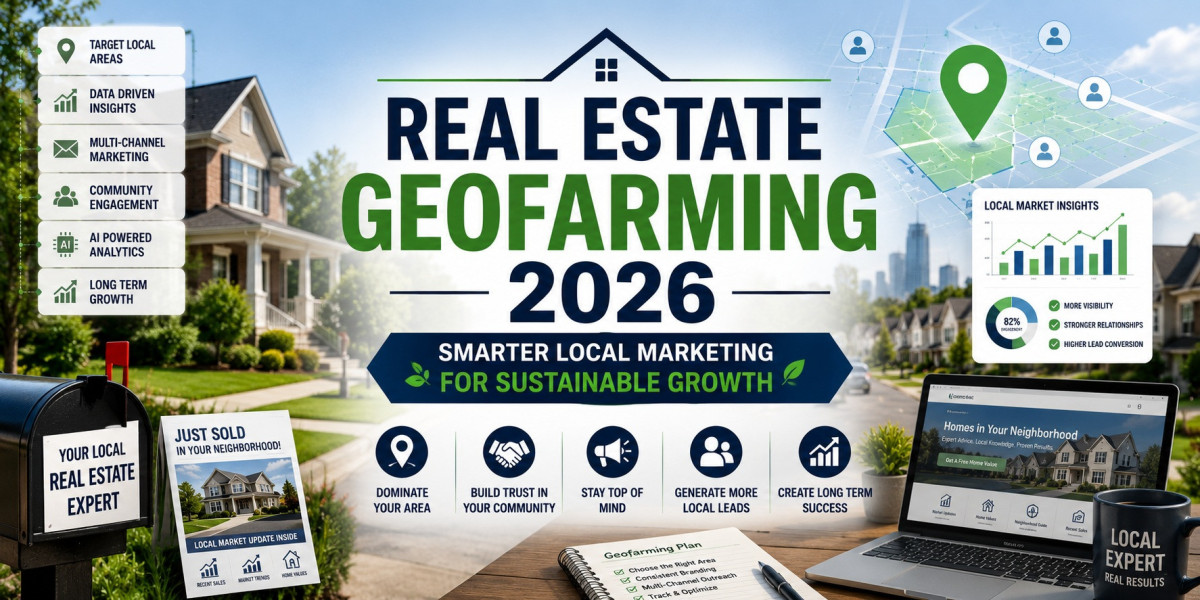

In 2026, real estate professionals are operating in a market shaped by digital competition, changing buyer behavior, and increasing advertising costs. Traditional lead generation methods are no longer enough to build a predictable pipeline. This shift has pushed many agents and brokerages to revisit one of the most effective long term growth strategies in the industry: real estate geofarming.
Modern geofarming is no longer limited to sending postcards to a neighborhood. It has evolved into a data driven, hyperlocal marketing approach that combines technology, analytics, community engagement, and personalized communication. For real estate businesses looking to dominate local markets, geofarming has become a strategic investment rather than a simple marketing tactic.
What Is Real Estate Geofarming?
Real estate geofarming 2026 refers to the practice of targeting a specific geographic area to build brand recognition, generate leads, and establish authority within a local market. Agents focus their marketing efforts on a defined neighborhood, subdivision, or community with the goal of becoming the go to real estate expert in that area.
In 2026, geofarming combines both offline and online strategies. Successful agents are integrating direct mail campaigns, local SEO, social media advertising, community events, AI powered market analysis, and customer relationship management tools into a single ecosystem.
The objective is simple: remain consistently visible to homeowners and buyers within a targeted region until your brand becomes synonymous with real estate expertise in that location.
The Role of Technology in Modern Geofarming
Technology has transformed geofarming from a manual process into a highly strategic marketing system. Real estate professionals now use advanced tools to identify high opportunity neighborhoods, analyze homeowner behavior, and automate outreach campaigns.
Artificial intelligence and predictive analytics are playing a major role in 2026. Agents can now identify homeowners who are more likely to sell based on behavioral data, property trends, and demographic changes. This allows businesses to allocate marketing budgets more efficiently.
Customer relationship management platforms also help agents maintain long term communication with residents. Automated email campaigns, personalized market updates, and targeted social media ads ensure consistent engagement without requiring excessive manual effort.
Local SEO has become equally important. When homeowners search for phrases like “best real estate agent near me” or “homes for sale in [community name],” agents with strong local digital visibility gain a significant advantage.
Choosing the Right Geofarm Area
Selecting the right neighborhood is one of the most important decisions in a geofarming strategy. Many agents make the mistake of targeting areas solely based on property values. While high value neighborhoods can produce larger commissions, competition is often more intense.
A successful geofarm should balance market activity, competition levels, turnover rates, and demographic alignment. Areas with moderate turnover and growing demand often provide better long term opportunities than oversaturated luxury markets.
Agents should also consider their personal expertise and brand positioning. For example, an agent specializing in family homes may perform better in suburban communities, while an urban property specialist may focus on downtown developments.
Consistency matters more than size. It is often better to dominate a smaller geographic area than to spread marketing efforts across multiple neighborhoods without building strong recognition.
Effective Geofarming Strategies for 2026
The most successful geofarming campaigns in 2026 combine multiple touchpoints to create a unified local presence.
Direct mail remains valuable when paired with digital engagement. Personalized postcards featuring local market statistics, recent sales, and neighborhood insights continue to generate strong response rates.
Community involvement is another powerful strategy. Sponsoring local events, participating in neighborhood initiatives, and supporting local businesses help agents build credibility beyond advertising.
Video content is also becoming increasingly important. Short neighborhood tours, market update videos, and local business spotlights perform well across social platforms and improve audience engagement.
Data driven advertising allows agents to target homeowners more precisely. Instead of broad campaigns, businesses can now deliver highly relevant messaging based on property ownership duration, online behavior, and local market trends.
Most importantly, successful geofarming requires patience. Building authority within a community takes time. Agents who commit to consistent branding and long term relationship building are more likely to see sustainable results.
The Future of Real Estate Geofarming
As competition increases in the real estate industry, geofarming will continue evolving into a more intelligent and personalized marketing strategy. AI driven insights, automation tools, and hyperlocal digital advertising will shape the next generation of real estate outreach.
For real estate businesses aiming to establish market authority in 2026, geofarming offers a scalable and sustainable path to growth.
FAQs
What is the main benefit of real estate geofarming?
The main benefit is building long term brand recognition within a targeted neighborhood. This increases trust, improves lead generation, and creates a more predictable sales pipeline.
How long does geofarming take to produce results?
Most geofarming campaigns require consistent effort for at least six to twelve months before generating significant results. Long term consistency is essential for success.
Is digital marketing important for geofarming in 2026?
Yes. Modern geofarming depends heavily on digital visibility, including local SEO, social media marketing, targeted advertising, and personalized online engagement.
Can small real estate agencies benefit from geofarming?
Absolutely. Geofarming allows smaller agencies to compete effectively by focusing on local expertise and community presence rather than large scale advertising budgets.