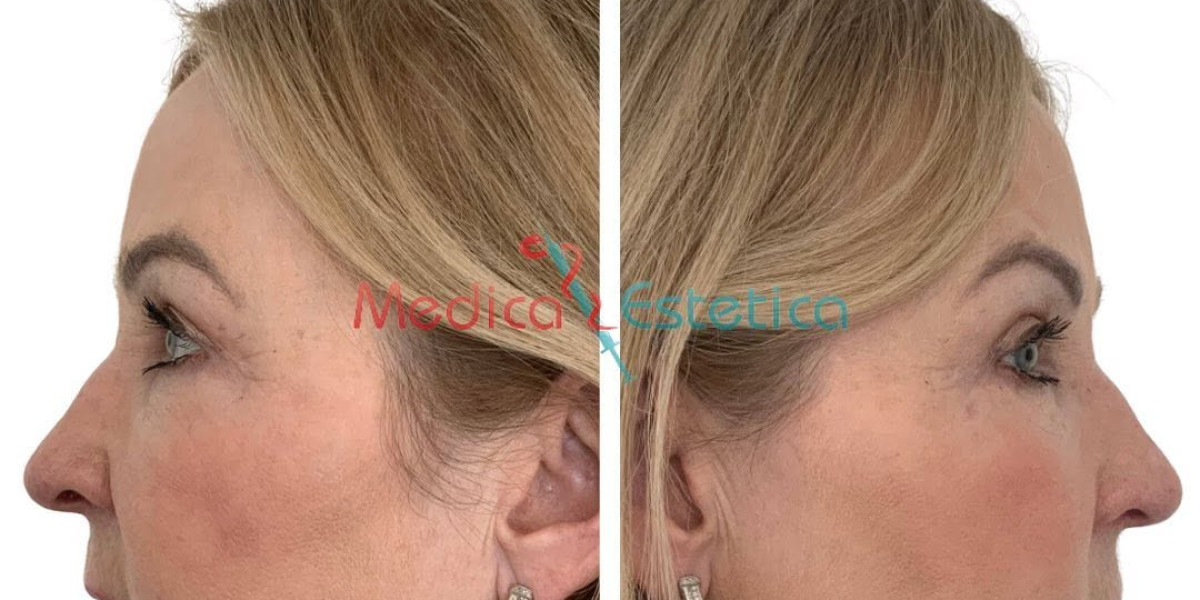

In early 2024, Dutch beauty writer Sophie van Gool spoke openly about cosmetic treatments during an interview with LINDA. magazine. What caught people’s attention was not the treatment itself. It was her reason for doing it. She explained that she was not trying to look younger or chase perfection. She simply wanted her face to reflect how energetic she still felt inside. After years of stress, work pressure, poor sleep, and hormonal changes, she noticed her jawline looked softer and heavier in photos. Makeup no longer created the same definition around her lower face.
A lot of women quietly relate to that feeling.
For many women after 35, the biggest changes do not begin with deep wrinkles. They begin around the lower face. The jawline slowly loses structure. The skin starts looking less firm. Side-profile photos suddenly feel unfamiliar. Even women who eat well, work out regularly, and take care of themselves notice these changes.
That is one reason why more women across the Netherlands are now researching kaaklijn fillers as a non-surgical way to restore definition while still looking natural.
But here is what many clinics do not explain properly.
Jawline fillers after 35 are completely different from jawline fillers at 25. Mature skin behaves differently. Collagen levels change. Facial fat shifts downward. Healing becomes slower. Even filler placement needs a more careful strategy if the goal is natural results instead of an overfilled appearance.
That is the part many women only discover after treatment.
Why Women Notice Their Jawline More After 35
One of the biggest surprises women talk about after their mid-thirties is how quickly the lower face can change.
Many first notice it during video calls or in side-profile photos. The jawline that once looked sharp and smooth suddenly appears softer. Some women describe feeling like their face looks “tired” even when they are fully rested.
This is not imagination. There is real science behind it.
According to the American Academy of Dermatology, collagen production decreases by about 1% every year after early adulthood. Collagen is what helps skin stay firm and supported. As collagen declines, skin becomes thinner and less elastic.
At the same time, facial fat pads begin shifting downward with age. This creates heaviness around the jaw and chin area. Hormonal changes also play a major role, especially for women entering perimenopause. Lower estrogen levels can reduce skin hydration and elasticity, which makes the jawline appear softer than before even without major weight gain.
This explains why many women after 35 feel that their face suddenly changed “all at once.”
It did not happen overnight. The structural support underneath the skin slowly weakened over time.
The Netherlands Is Seeing a Major Rise in Filler Treatments
The demand for fillers in the Netherlands has increased significantly over the last few years.
A study published in the Journal of Cosmetic Dermatology found that injectable treatments in the Netherlands increased by 12% between 2016 and 2019. The same research estimated that approximately 1 in every 41 Dutch women had undergone filler treatment during that period.
That number surprised many medical professionals because cosmetic injectables are no longer limited to celebrities or influencers.
The average patient today is often a working professional, a mother, or a woman simply wanting to look less exhausted.
What has also changed is the type of result women now want.
A few years ago, dramatic contouring and extremely sharp jawlines dominated social media. Today, women are asking for softer and more natural improvements.
Most women no longer want people to notice the filler itself.
They simply want comments like:
“You look fresh lately.”
“You look rested.”
“Did you change something?”
That subtle difference is shaping the entire aesthetic industry right now.
What Jawline Fillers Actually Do After 35
Jawline fillers are usually made from hyaluronic acid, a substance naturally found in the body. The filler is injected strategically along the jawline to improve support and definition.
But here is something important many clinics skip over.
After 35, jawline fillers are usually less about “creating” a jawline and more about restoring structure that has gradually disappeared with age.
That difference matters.
A younger patient may want dramatic contouring because their skin still has strong elasticity and firm support underneath. Women after 35 usually need softer enhancement that blends naturally with facial movement.
The goal is balance.
A good jawline filler should never make someone look frozen or overly sculpted.
In fact, the best work often goes unnoticed.
What Nobody Tells You About Looking “Too Filled”
This is one of the biggest hidden truths in cosmetic aesthetics.
Too much filler can actually age the face.
Overfilled jawlines often look heavier rather than sharper, especially in mature skin. Some women end up looking swollen in certain lighting or photos even though the treatment technically “worked.”
Aesthetic doctors now use terms like “filler fatigue” to describe this overly filled appearance that can happen after years of repeated treatments.
A real example came from beauty influencer Jaclyn Hill, who publicly discussed her experience with filler migration after years of cosmetic treatments. At age 35, she shared ultrasound footage showing filler that had moved beyond the original injection areas. She later dissolved part of the filler because she felt her face no longer looked natural.
Her story resonated with many women because it highlighted something the beauty industry rarely discusses openly.
More filler does not automatically create better results.
For women after 35, conservative treatment plans usually age much better over time.
Why the Injector Matters More Than the Filler Brand
Many clinics advertise premium filler brands as though the product alone guarantees perfect results.
That is not how real aesthetic medicine works.
The injector’s technique matters far more than the brand itself.
An experienced injector studies facial anatomy carefully. They understand how aging changes proportions around the jaw, chin, cheeks, and neck. They know where support is needed and where adding too much product could create heaviness.
In the Netherlands, experts often recommend choosing doctors with the title Cosmetisch Arts KNMG, which represents advanced cosmetic medical training and stricter professional standards.
Even Erasmus MC publicly advised patients to seek recognized cosmetic doctors because medical expertise plays a major role in safety and long-term outcomes.
Women who are happiest with their filler results usually say the same thing afterward.
They still looked like themselves.
Just fresher.
Recovery Is More Real Than Instagram Shows
Social media often makes filler treatments look effortless.
A patient walks into a clinic and suddenly leaves looking perfect thirty minutes later.
Real recovery is different.
Most women experience swelling after jawline filler treatment. Mild bruising is also common. Some women feel tenderness while chewing or touching the jaw area for several days.
For women after 35, swelling can sometimes last longer because skin healing slows slightly with age.
This is why experienced injectors usually recommend avoiding important events immediately after treatment. Weddings, vacations, or professional photos should ideally be scheduled at least two weeks later.
Another thing women rarely hear beforehand is that filler results can initially feel emotionally strange.
Even when the treatment looks good, the face may temporarily feel unfamiliar during the swelling phase. This usually improves once the filler settles naturally.
Some women even report checking mirrors constantly during the first week because they are not used to seeing extra definition around their lower face. That emotional adjustment phase is normal, but very few clinics talk about it openly beforehand.
The Emotional Side of Fillers Nobody Talks About
This conversation matters more than people realize.
A lot of women start researching fillers during emotionally stressful periods. Divorce, burnout, menopause, relationship changes, or career pressure often make women suddenly more aware of aging.
That does not mean cosmetic treatments are wrong.
But expectations matter.
Healthy expectations usually lead to healthier experiences.
Women who feel happiest after jawline filler treatment often approach it as a small refinement rather than a life-changing transformation. They understand that fillers can improve facial balance, but they cannot remove emotional insecurity or completely stop aging.
This honesty is important because social media often sells cosmetic treatments as confidence in a syringe.
Real life is more complicated than that.
One Dutch clinic consultant shared in an interview that many women arrive saying they want a “sharper jawline,” but after deeper conversation, what they really want is to stop looking constantly tired or stressed. That emotional difference changes the entire treatment approach.
Safety Is More Important Than Cheap Prices
One of the biggest mistakes patients make is choosing clinics mainly because they offer low prices.
Cheap filler treatments can become expensive corrections later.
The Dutch National Institute for Public Health and the Environment (RIVM) has repeatedly warned about cosmetic filler risks and safety standards. According to Dutch research, serious complications from hyaluronic acid fillers remain rare, with estimated severe complication rates around 0.03%. However, those risks increase significantly when injections are performed incorrectly.
Complications may include blocked blood vessels, asymmetry, infection, or filler migration.
This is exactly why permanent cosmetic fillers were banned in the Netherlands for aesthetic use.
The RIVM concluded that the long-term risks of permanent fillers outweighed the cosmetic benefits.
Most reputable Dutch clinics now use temporary hyaluronic acid fillers because they are safer and can also be dissolved if necessary.
Women should never feel uncomfortable asking clinics about qualifications, emergency protocols, filler brands, medical experience, and complication management.
A trustworthy clinic welcomes those questions instead of avoiding them.
Why Natural Results Usually Look Better in Real Life
One interesting shift happening in aesthetics right now is that women are moving away from “Instagram beauty.”
Perfectly sharp jawlines and exaggerated facial angles may look dramatic online, but they often appear unnatural in daylight or face-to-face conversations.
Real beauty tends to come from balance and movement.
The women who age best cosmetically are often the ones who make the smallest adjustments over time rather than dramatic changes all at once.
After hours of research into Dutch clinic reviews, medical interviews, and real patient experiences, one pattern became very clear.
Women rarely regret subtle filler.
They usually regret doing too much too quickly.
That insight alone explains why conservative aesthetic medicine is becoming far more popular across Europe.
What Women Should Know Before Booking Jawline Fillers
The most important thing women should understand is that natural-looking filler is usually a slow process.
Good injectors often recommend starting with less product first. Additional filler can always be added later if needed.
Women should also understand that results vary depending on skin quality, facial structure, age, lifestyle, metabolism, and hormonal changes.
This is why two people receiving the same amount of filler may look completely different afterward.
A good consultation should feel educational rather than sales-driven. Patients should leave understanding both the benefits and limitations of treatment.
That honesty is often the biggest sign of a trustworthy clinic.
Women should also pay attention to whether the clinic focuses only on filler or whether they discuss overall facial harmony. Experienced injectors understand that the jawline does not exist alone. The chin, cheeks, skin quality, and even posture can influence how the final result looks.
The Real Goal Is Not Looking Younger
This may be the most important truth of all.
Most women after 35 are not trying to become twenty-five again.
They simply want their reflection to match how alive, energetic, and confident they still feel inside.
That is why natural jawline fillers have become so popular in the first place.
When done correctly, they do not erase identity.
They quietly restored balance and that time slowly softened over the years.
And honestly, those are usually the most beautiful results of all.