
Walk into any heavy manufacturing plant and you’ll hear it before you see it.
That grinding noise.
That vibration operators try to ignore for a few weeks too long.
And nine times out of ten? The bearing setup was wrong from the start.
I've seen expensive conveyor systems fail because someone chose a standard ball bearing where a Tapered Roller Bearings assembly should’ve been installed. Not because the machine was poorly built. The load dynamics were misunderstood. Big difference.
And honestly, that’s where most businesses lose money quietly — not in machine purchase costs, but in downtime, premature wear, and maintenance cycles nobody planned for.
So, What Exactly Are Tapered Roller Bearings?
At their core, Tapered Roller Bearings are designed to handle both radial and axial loads simultaneously. That's the real advantage.
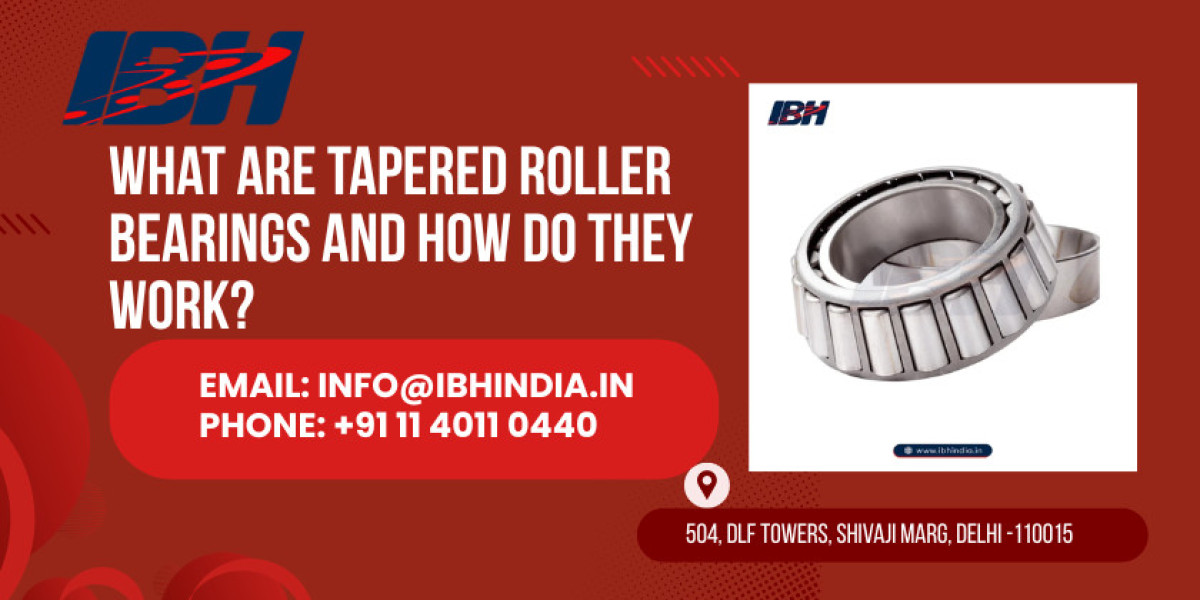
Unlike standard ball bearings, these use tapered inner and outer raceways with conical rollers positioned between them. The geometry matters. A lot.
Because the rollers and raceways taper toward a common point, the bearing distributes force much more efficiently under heavy load conditions. That’s why you’ll find them inside:
- Industrial gearboxes
- Mining equipment
- Construction machinery
- Truck wheel hubs
- Steel rolling mills
And yes, even high-load agricultural equipment where shock loads are constant.
You don’t use these bearings because they look impressive. You use them because regular bearings start failing when pressure gets ugly.
Here's Where They Work Differently
Most business owners know bearings reduce friction. True. But with Tapered Roller Bearings, the magic is in load management.
A standard deep groove bearing struggles once axial force increases. Misalignment begins. Heat builds up. Lubrication degrades faster than expected.
Then comes failure.
A tapered roller setup spreads that load across a larger contact surface. The rollers stay aligned under stress, which reduces localized pressure points.
That means:
- Better load carrying capacity
- Lower operating temperatures
- Improved service life
- Reduced vibration under heavy-duty conditions
Simple idea. Massive operational impact.
The Anatomy Matters More Than People Think
A proper Tapered Roller Bearings assembly usually consists of four key components:
Cone (Inner Ring)
This attaches directly to the rotating shaft.
Cup (Outer Ring)
Mounted into the housing assembly.
Tapered Rollers
These carry the load while maintaining alignment under pressure.
Cage
Keeps rollers evenly spaced and prevents friction between them.
Sounds straightforward… until preload settings are wrong.
And honestly? Improper preload is one of the biggest reasons industrial bearings fail prematurely. Too loose and vibration destroys surfaces. Too tight and heat buildup cooks the lubricant.
I've watched maintenance teams replace perfectly good bearings because the installation tolerance was off by fractions of a millimeter.
That’s the thing about industrial motion systems — small mistakes become expensive very quickly.
Why Heavy Industries Prefer Them
There’s a reason industries don’t compromise here.
Take cement plants, for example. Crushers and rotary kilns generate enormous combined loads. Standard bearings simply don’t survive long-term exposure to contamination, shock loading, and continuous operation.
That’s where brands like Nachi Tapered Roller Bearings become popular in industrial environments. Their precision machining and heat treatment consistency make a noticeable difference under harsh conditions.
And businesses working with reliable Nachi Tapered Roller Bearings Suppliers or experienced Nachi Tapered Roller Bearings Suppliers in India usually experience fewer compatibility and installation issues later.
Because sourcing matters more than most procurement teams realize.
Cheap bearings often look identical on paper. Performance tells a different story after 8,000 operating hours.
Why Housing Selection Changes Everything
Bearings alone don’t solve operational issues.
The housing setup matters just as much.
That’s where Plummer Block Housing systems enter the picture. These housings support rotating shafts while protecting bearings from dust, moisture, and alignment problems.
Honestly, I’ve seen plants spend heavily on premium bearings… then ruin them using poor-quality housings.
Makes no sense.
A well-designed Plummer Block Housing helps with:
- Easier maintenance access
- Better shaft alignment
- Reduced contamination entry
- Improved heat dissipation
And in industries dealing with high contamination — mining, paper mills, food processing — that protection layer becomes critical.
Reliable sourcing also matters here. Many manufacturers prefer working with established Nachi Plummer Block Housing Distributors and experienced Nachi Plummer Block Housing Distributors in India because dimensional accuracy affects overall bearing life.
Tiny deviations create massive long-term stress.
Don’t Ignore Misalignment Problems
Now this is where many operations teams get caught.
Not every machine operates under perfect alignment conditions. Shafts bend. Loads shift. Structural settling happens over time.
That’s why Spherical Roller Bearings are often used alongside tapered bearing systems in demanding applications.
They’re built to handle misalignment without sacrificing load capacity.
A lot of steel plants and heavy conveyor operations combine Tapered Roller Bearings with Spherical Roller Bearings depending on shaft position and movement behavior.
Smart engineering isn’t about using one bearing everywhere. It’s about using the right bearing where the load profile actually demands it.
And yes — businesses sourcing through trusted Nachi Spherical Roller Bearings Suppliers or experienced Nachi Spherical Roller Bearings Distributors in India usually avoid compatibility headaches later during maintenance shutdowns.
Heat, Lubrication, and Reality on the Shop Floor
Look, no bearing survives poor lubrication.
Doesn’t matter how premium it is.
I’ve seen operators blame bearing manufacturers when the real issue was grease contamination or improper relubrication intervals. Especially in dusty industrial environments.
With Tapered Roller Bearings, lubrication becomes even more critical because contact surfaces are larger compared to ball bearings.
Here’s what actually helps in real operations:
Correct Lubricant Selection
Viscosity must match operating speed and temperature.
Proper Sealing
Contaminants destroy raceways faster than overloads sometimes.
Installation Accuracy
Even slight mounting errors affect roller alignment.
Regular Vibration Monitoring
Predictive maintenance catches early-stage failures before catastrophic shutdowns happen.
And honestly… businesses investing in condition monitoring systems usually save far more than they spend.
Why Procurement Teams Need Better Bearing Knowledge
This part gets overlooked constantly.
Procurement departments often compare bearings only by price. But industrial bearing selection should consider:
- Dynamic load rating
- Static load rating
- RPM requirements
- Lubrication method
- Operating temperature
- Environmental contamination
Because a cheaper bearing that fails early isn't cheaper anymore.
That’s why many OEMs prefer dealing directly with trusted Nachi Tapered Roller Bearings Dealers, reliable Nachi Plummer Block Housing Suppliers in India, and experienced Nachi Spherical Roller Bearings Distributors who actually understand application engineering.
Not just catalog selling.
Big difference.
FAQs
What industries commonly use Tapered Roller Bearings?
They’re heavily used in mining, automotive, construction, steel manufacturing, cement plants, agriculture, and industrial gear systems where combined radial and axial loads exist.
How do Tapered Roller Bearings reduce friction?
The tapered roller design distributes load evenly across larger contact surfaces, reducing localized stress, heat generation, and wear during operation.
Are Tapered Roller Bearings better than ball bearings?
Depends on the application. For high-load industrial systems handling both axial and radial forces, tapered bearings usually outperform standard ball bearings significantly.
Why is Plummer Block Housing important?
It protects bearings, supports shaft alignment, improves maintenance access, and helps prevent contamination-related failures in industrial environments.
When should businesses use Spherical Roller Bearings?
They’re ideal where shaft misalignment, heavy shock loads, or structural deflection occur during machine operation.
Why do companies prefer Nachi Tapered Roller Bearings?
Because of their precision engineering, durability under harsh industrial conditions, and consistent performance in heavy-duty applications.
Final Thoughts
Here’s the thing most businesses eventually learn the hard way…
Bearings aren’t small components. They’re operational risk managers.
A poorly selected Tapered Roller Bearings setup can quietly destroy productivity for months before failure becomes obvious. And by then, the damage usually spreads beyond the bearing itself — shafts, housings, seals, couplings… everything starts suffering.
That’s why experienced industrial teams pay attention not just to bearings, but also to proper Plummer Block Housing systems and reliable Spherical Roller Bearings support where applications demand flexibility.
Because uptime isn’t luck.
It’s engineering discipline.
And honestly? The companies that understand that early usually spend far less fixing preventable failures later.
Don’t stop here — read another valuable blog below.





