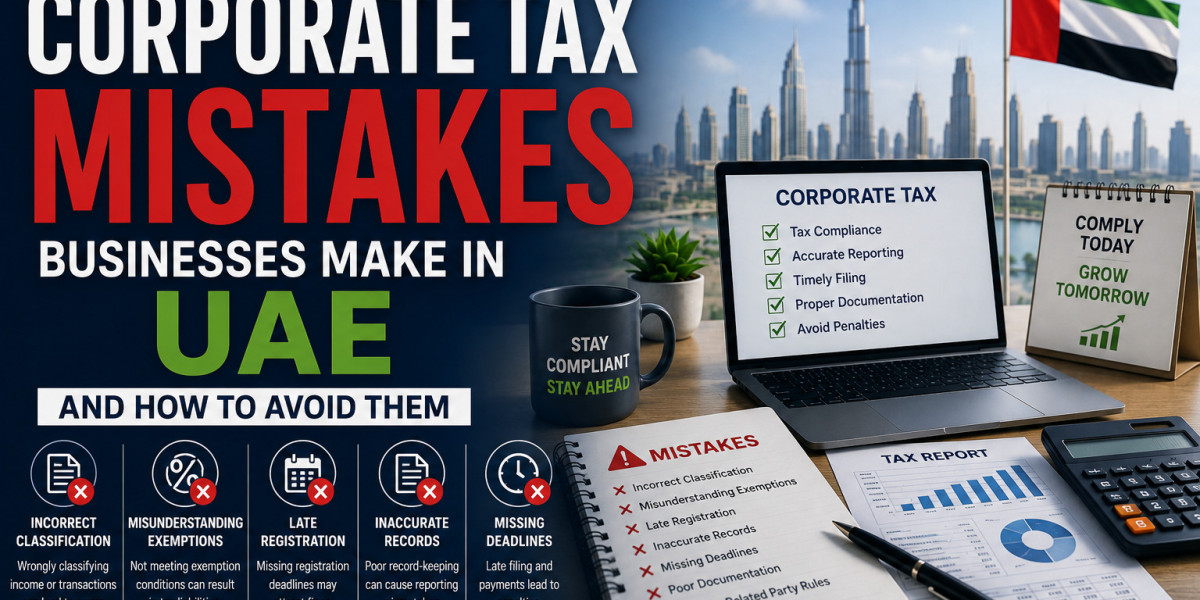

The introduction of corporate tax in the UAE has significantly changed how businesses manage their financial reporting and compliance responsibilities. Companies operating in the UAE are now required to maintain accurate accounting records, understand taxable income, and meet strict filing deadlines.
While many businesses are adapting to the new tax environment, a large number still make avoidable compliance errors that can result in penalties, financial losses, and operational disruptions. Understanding the most common corporate tax mistakes in UAE is essential for protecting your business and maintaining long-term financial stability.
Whether you run a startup, SME, or large corporation, avoiding these mistakes can help your business stay compliant and financially organized.
Why Corporate Tax Compliance Matters in UAE
Corporate tax compliance is no longer optional for businesses operating in the UAE. Companies are expected to:
- Maintain proper accounting records
- File accurate tax returns
- Meet reporting deadlines
- Calculate taxable income correctly
- Maintain supporting documentation
- Follow Federal Tax Authority (FTA) regulations
Failure to comply with these requirements may lead to penalties, audits, reputational damage, and unnecessary financial stress.
This is why businesses must take a proactive approach to tax management and compliance planning.
Common Corporate Tax Mistakes Businesses Make in UAE
1. Poor Recordkeeping and Inaccurate Financial Documentation
One of the most common mistakes businesses make is failing to maintain organized financial records.
Many companies struggle with:
- Missing invoices
- Incomplete expense records
- Incorrect bookkeeping entries
- Unorganized financial statements
- Lack of supporting documents
Poor documentation can lead to inaccurate tax calculations and difficulties during audits.
How to Avoid It
Businesses should implement proper accounting systems and maintain updated records for all financial transactions. Regular bookkeeping reviews can help identify errors before they become major compliance issues.
2. Missing Corporate Tax Registration Deadlines
Some businesses delay tax registration because they are uncertain about whether corporate tax applies to them.
Late registration can lead to penalties and create unnecessary compliance risks.
How to Avoid It
Businesses should assess their tax obligations early and seek professional guidance if needed. Understanding registration thresholds and deadlines is critical for avoiding penalties.
3. Incorrect Calculation of Taxable Income
Calculating taxable income incorrectly is another major issue for businesses in the UAE.
Errors often occur because companies:
- Misclassify expenses
- Ignore taxable transactions
- Misinterpret exemptions
- Fail to reconcile financial statements properly
Incorrect calculations may result in underpayment or overpayment of taxes.
How to Avoid It
Businesses should conduct regular financial reviews and work with experienced tax advisors to ensure taxable income is calculated accurately.
4. Ignoring Corporate Tax Planning
Many businesses only think about taxes when filing deadlines approach. Reactive tax management often leads to cash flow problems and compliance issues.
Without proper planning, businesses may struggle to:
- Allocate funds for tax payments
- Forecast financial obligations
- Manage tax liabilities effectively
How to Avoid It
Companies should implement year-round tax planning strategies that include budgeting, forecasting, and compliance monitoring.
5. Failing to Understand UAE Tax Regulations
Corporate tax regulations can be complex, especially for businesses unfamiliar with UAE tax laws.
Some businesses make compliance mistakes simply because they misunderstand legal requirements.
How to Avoid It
Business owners should stay informed about regulatory updates and consult qualified tax professionals who understand UAE corporate tax laws.
6. Delayed or Inaccurate Tax Filing
Submitting tax returns late or filing inaccurate information can lead to serious penalties.
Common filing issues include:
- Incorrect financial figures
- Missing supporting documents
- Filing after deadlines
- Incomplete tax reports
How to Avoid It
Businesses should establish internal compliance calendars and review all financial data carefully before submission.
Professional tax consultants can also help ensure filing accuracy.
7. Mixing Personal and Business Expenses
This is a frequent problem among startups and small businesses.
When personal and business expenses are combined, financial reporting becomes confusing and inaccurate.
How to Avoid It
Businesses should maintain separate bank accounts, accounting systems, and expense tracking procedures for business activities only.
8. Poor VAT and Corporate Tax Coordination
Some companies focus only on VAT compliance without aligning it with corporate tax reporting.
Inconsistent financial records between VAT filings and corporate tax reports may trigger audits or compliance concerns.
How to Avoid It
Businesses should integrate VAT and corporate tax reporting processes to ensure consistency across all financial records.
9. Not Preparing for Tax Audits
Many businesses underestimate the importance of audit preparation until they are contacted by authorities.
Lack of preparation can create stress and increase the risk of compliance problems.
How to Avoid It
Companies should maintain audit-ready documentation at all times by organizing records and conducting periodic compliance reviews.
10. Trying to Handle Complex Tax Matters Without Professional Help
Some businesses attempt to manage all tax responsibilities internally without expert support. This often leads to avoidable errors and financial risks.
How to Avoid It
Working with professional tax advisors helps businesses stay compliant, reduce risks, and improve financial planning.
The Financial Impact of Corporate Tax Mistakes
Corporate tax errors can negatively affect businesses in several ways.
Financial Penalties
Late filings, inaccurate reporting, and non-compliance can result in significant fines.
Operational Disruptions
Compliance issues may delay business activities and create administrative complications.
Increased Audit Risks
Poor reporting practices increase the likelihood of tax audits and investigations.
Reputational Damage
Non-compliance can affect relationships with investors, partners, and financial institutions.
Cash Flow Problems
Unexpected tax liabilities can place pressure on business finances.
Avoiding these risks requires strong financial systems and proactive tax management.
Best Practices for Corporate Tax Compliance in UAE
To maintain compliance and reduce risks, businesses should follow these best practices:
- Maintain accurate accounting records
- Monitor filing deadlines carefully
- Conduct regular financial reviews
- Understand corporate tax obligations
- Separate personal and business finances
- Keep supporting documentation organized
- Develop long-term tax planning strategies
- Work with experienced tax advisors
These practices help businesses remain financially organized and prepared for regulatory requirements.
Why Professional Tax Advisory Services Matter
Corporate tax compliance requires expertise, attention to detail, and continuous monitoring of changing regulations.
Professional tax advisors help businesses:
- Understand UAE tax laws
- Improve compliance procedures
- Reduce reporting errors
- Manage audits effectively
- Develop tax-efficient strategies
- Support financial planning and growth
Outsourcing tax management allows business owners to focus on operations while experts handle compliance responsibilities.
Final Thoughts
As corporate tax regulations continue to evolve, businesses in the UAE must take compliance seriously. Even small mistakes can lead to financial penalties, reporting issues, and operational disruptions.
Understanding and avoiding common corporate tax mistakes in UAE helps businesses maintain accurate reporting, reduce risks, and improve financial stability. From proper bookkeeping and tax planning to audit preparation and professional advisory support, proactive compliance management is essential for long-term success.
Businesses seeking reliable tax advisory and corporate compliance support can benefit from the expertise offered by Dubai Business & Tax Advisors.