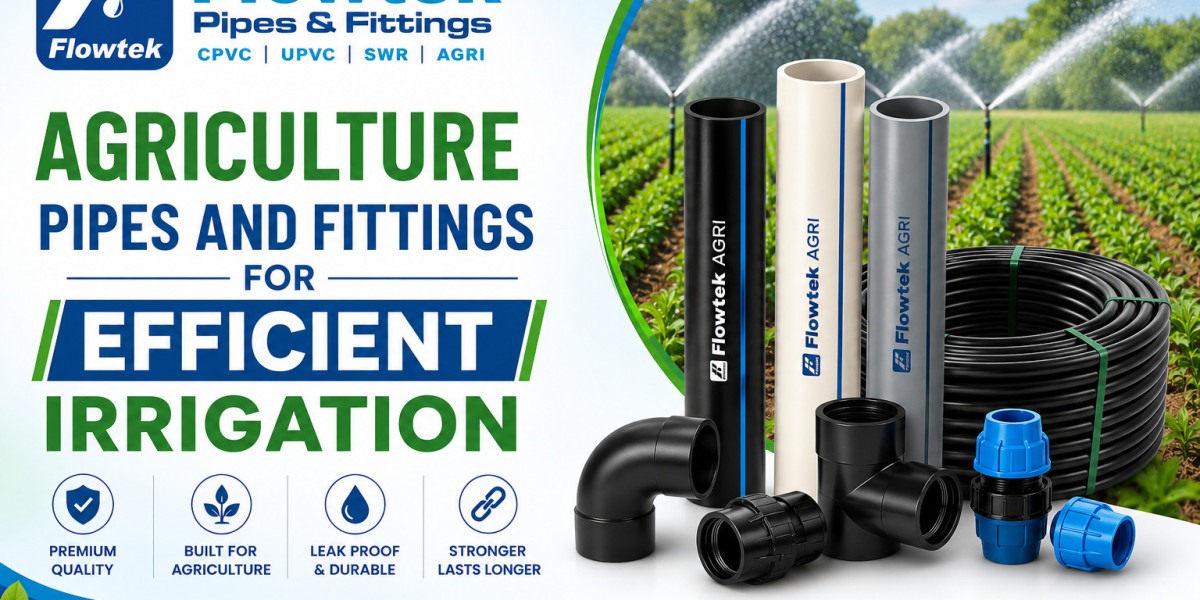

A failed irrigation line rarely breaks during inspection. It bursts three weeks into crop rotation, usually when water pressure spikes and labour is already stretched thin. That’s exactly why serious buyers now pay closer attention to Agriculture Pipes And Fittings instead of treating them like low-value commodities.
Most buyers learn this late.
A weak coupler or poorly compounded pipe resin can waste thousands of litres in one season. In parts of Haryana and Rajasthan, where groundwater levels continue dropping every year, leakage is no longer just an operational issue. It directly affects farm profitability. According to India’s Ministry of Jal Shakti, agriculture still consumes nearly 80% of the country’s freshwater resources. That changes how procurement teams evaluate irrigation infrastructure.
And yet, many procurement decisions are still made on price per metre alone.
The Specification Detail Most Buyers Skip During Procurement
Modern irrigation systems are expected to handle fluctuating pressure, chemical exposure from fertilizers, UV stress, and rough installation conditions. Cheap material survives one of those conditions. Good material survives all four.
PVC Irrigation Pipes Built for Pressure Stability
High-quality PVC Irrigation Pipes are commonly used in drip and sprinkler irrigation because they resist corrosion and maintain internal flow consistency. Most agricultural-grade PVC pipes operate between 2.5 kg/cm² and 10 kg/cm² pressure ratings depending on application.
Which means pipe selection should match actual field pressure, not estimated pressure.
A surprising number of suppliers still sell oversized pressure ratings to inflate pricing. Buyers end up paying for specifications the project never needed. The opposite mistake is worse. Under-rated pipes crack near joints after repeated pump cycling.
Agriculture Irrigation Pipes and Flow Efficiency
The inner wall smoothness of Agriculture Irrigation Pipes directly affects friction loss. Even a small reduction in internal roughness can improve water delivery efficiency across large farming zones.
Nobody tells you this during negotiation because smoothness isn’t visible in a sample piece.
That’s where resin quality matters. Virgin-grade PVC compound generally performs better under continuous irrigation cycles than heavily recycled blends. Recycled content lowers cost, yes. It also increases brittleness in high-heat regions after prolonged UV exposure.
Fittings Decide System Reliability More Than Pipes
Couplers, elbows, tees, reducers, and end caps carry stress concentration points. Field failure usually starts there first.
A supplier who cannot provide dimensional consistency reports for fittings is asking you to absorb future maintenance costs.
ISO-certified production matters because fitting tolerances must align precisely with pipe outer diameter standards. Even a 1.2 mm mismatch can create micro-leakage under sustained pressure.
The Harder Part Buyers Underestimate
Storage conditions before dispatch.
PVC pipes stacked incorrectly during peak summer can deform slightly before they ever reach site installation. That deformation may not appear during unloading, but joint alignment problems start later. Experienced buyers ask about warehouse practices. New buyers usually don’t.
Five Supplier Evaluation Criteria That Actually Matter
1. Ask About Raw Material Consistency
Good suppliers specify resin grade sourcing.
Bad suppliers say things like, “Material varies batch to batch, but performance stays same.” That answer should stop the conversation immediately.
2. Demand Pressure Testing Records
Hydrostatic pressure testing is standard practice for serious Agriculture Pipes And Fittings Manufacturers.
If testing records are unavailable or “under process,” you are dealing with a trading operation pretending to be a manufacturer.
3. Verify Certification Dates, Not Just Logos
An ISO logo printed on packaging proves nothing by itself.
Most buyers never verify whether the certification is active. Lapsed certification usually signals deeper operational neglect — calibration gaps, inconsistent QA checks, or documentation failures.
4. Check Dispatch Capacity During Peak Agricultural Seasons
April through July creates heavy irrigation demand across North India. Lead times often double.
Here’s the issue: many suppliers accept orders they already know they cannot deliver on schedule. Procurement teams discover the delay only after advance payment clears.
5. Evaluate Fitting Compatibility Across Product Batches
Consistent dimensional accuracy matters more than catalog variety.
A bad answer sounds like this: “Minor fitting adjustment is normal during installation.” No. Excessive adjustment means manufacturing inconsistency.
Why Better Agriculture Pipes Protect Margin, Not Just Water
Lower Leakage Means Lower Operating Cost
Even a 3% water loss across large irrigation layouts creates measurable pump energy waste over a full season.
Reliable Agriculture Irrigation Pipes reduce pressure drops and improve distribution uniformity across crops.
Reduced Field Maintenance Interruptions
Nobody budgets correctly for emergency repair labour.
A failed fitting during irrigation scheduling can delay watering cycles for hundreds of acres. That affects crop health faster than many buyers expect, especially during high-temperature months.
Better UV Resistance Extends Service Life
Quality PVC compounds resist surface cracking under prolonged sunlight exposure. In North Indian agricultural conditions, properly manufactured pipes can remain operational for 8–12 years depending on pressure conditions and maintenance.
Stable Supply Improves Project Planning
Procurement teams hate uncertainty more than pricing fluctuations.
Consistent dispatch schedules help dealers and wholesalers manage inventory turnover without overstocking seasonal demand.
Chemical Resistance Matters More Than Before
Modern farming uses more soluble fertilizers and chemical dosing systems than it did a decade ago. Inferior pipe material reacts poorly over time, especially around joints and connectors.
That degradation rarely appears during the warranty period.
Proper Irrigation Infrastructure Supports Water Conservation Goals
India’s micro-irrigation market crossed ₹11,500 crore in recent industry estimates, driven largely by water conservation initiatives and government subsidy programs. Efficient pipe systems are part of that transition.
Why Buyers Search for Agriculture Pipes And Fittings Manufacturers in India
India remains one of the fastest-growing irrigation infrastructure markets globally. Buyers sourcing from Agriculture Pipes And Fittings Manufacturers in India often benefit from competitive production costs, wider product ranges, and shorter export lead times compared to several overseas markets.
Kundli, Sonipat Haryana — especially near the Delhi-NCR industrial belt — has become strategically important for manufacturing logistics.
That location matters more than many overseas buyers realise.
From Kundli, dispatch movement toward Punjab, Rajasthan, Uttar Pradesh, and port-linked transport routes becomes easier compared to manufacturers operating from isolated industrial clusters. Faster truck availability reduces shipment uncertainty during seasonal demand spikes.
Most wholesalers evaluating Agriculture Irrigation Pipes Manufacturers in India now prioritise dispatch reliability alongside pricing. Freight delays damage dealer relationships faster than moderate price differences ever will.
And demand for PVC Irrigation Pipes Manufacturers in India continues rising because PVC remains lighter, corrosion-resistant, and easier to install than several metal-based alternatives used in older irrigation networks.
We Learned Early That Pipe Quality Gets Tested in the Field, Not the Catalog
At Flowtekpipes, we work with wholesalers, procurement managers, and brand owners who care about consistency more than marketing language. We manufacture irrigation piping systems from our facility in Kundli, Sonipat Haryana with a strong focus on dimensional accuracy and pressure performance.
We’ve seen what happens when low-grade fittings enter large irrigation projects. The complaints don’t arrive immediately. They appear after one crop cycle, once thermal expansion and pressure variation start stressing the joints.
That’s why we maintain strict batch-level quality checks before dispatch.
We also changed one of our packaging methods in late 2022 after repeated transporter feedback about edge compression during long-distance loading. Small operational changes like that reduce damage claims later. Experience teaches those lessons quickly.
For buyers evaluating long-term sourcing partnerships, that operational discipline matters.
Send the Right Information First — It Speeds Up Quotation Accuracy
If you’re sourcing Agriculture Pipes And Fittings, send us your required pipe diameter range, pressure class, monthly volume estimate, destination location, and whether the requirement is OEM, wholesale, or project-based.
We typically respond within one business day.
Our MOQ depends on pipe dimensions and dispatch location, but most wholesale orders begin from standard commercial production quantities. If your requirement involves recurring supply schedules, mention expected quarterly demand upfront. That helps us plan production allocation properly instead of revising timelines later.
Conclusion
Reliable Agriculture Pipes And Fittings are no longer just utility products sitting in warehouse inventory. They directly affect water efficiency, maintenance cost, and dealer credibility in the field. Buyers who evaluate suppliers only on landed price usually end up paying more through failures, delays, or inconsistent supply quality later. As irrigation infrastructure expands across India, procurement standards will keep getting stricter — and rightly so.
Here is the another blog you might be interested in:
Leading PVC Irrigation Pipes Manufacturers in India
FAQs
What Should Buyers Check Before Choosing Agriculture Pipes And Fittings Manufacturers?
Start with pressure testing records, resin quality consistency, and validity period of certificates. Numerous Agriculture Pipes And Fittings Manufacturers showcase certificates that expired years ago. In addition, inquire whether fittings are manufactured in-house or out-sourced. Outsourced fittings often cause dimensional mismatch.
What is the lifespan of PVC Irrigation Pipes in Agriculture?
If installed correctly and if the pressure is maintained correctly, quality PVC Irrigation Pipes can be used for 8 to 12 years. However, extreme UV exposure, poor pump sizing and poor storage can drastically shorten their lifespan.
Can Agriculture Irrigation Pipes be used in Irrigation Systems that Require Fertilizers?
Yes, generally Agriculture Irrigation Pipes are able to transport soluble fertilizers. However, the more concentrated the chemicals, the compatibility of the lower grade pipes should be assessed.
Why do buyers choose Agriculture Irrigation Pipes Manufacturers in India?
The flexibility of lead times and scale of manufacture is particularly important. Many Agriculture Irrigation Pipes Manufacturers in India equally prefer to provide customization for regional agriculture as compared to other countries.
Why does dripping in the joints of irrigation pipe occur?
Usually, it occurs due to poor fitting tolerances or due to the pressure of installation. In some circumstances, low-quality recycled material becomes brittle after temperature changes. Cheap fittings are more often the cause, before the pipe fails.
Can PVC Irrigation Pipes Manufacturers in India handle export orders?
Most of the PVC Irrigation Pipes Manufacturers in India work with the export market, however, for large value orders, buyers should check the standard of packaging and the dispatch documentation practice before making an order.
Do all Agriculture Pipe and Fittings Manufacturers have the same quality?
No, not and the quality is not the same.
Some suppliers significantly lower prices by using low quality resins and recycled content which may pass visual inspection but ultimately will not withstand pipe field stress. Working hard to lower prices may mean true efficiencies, but more often than not, the price reflects quality.





